
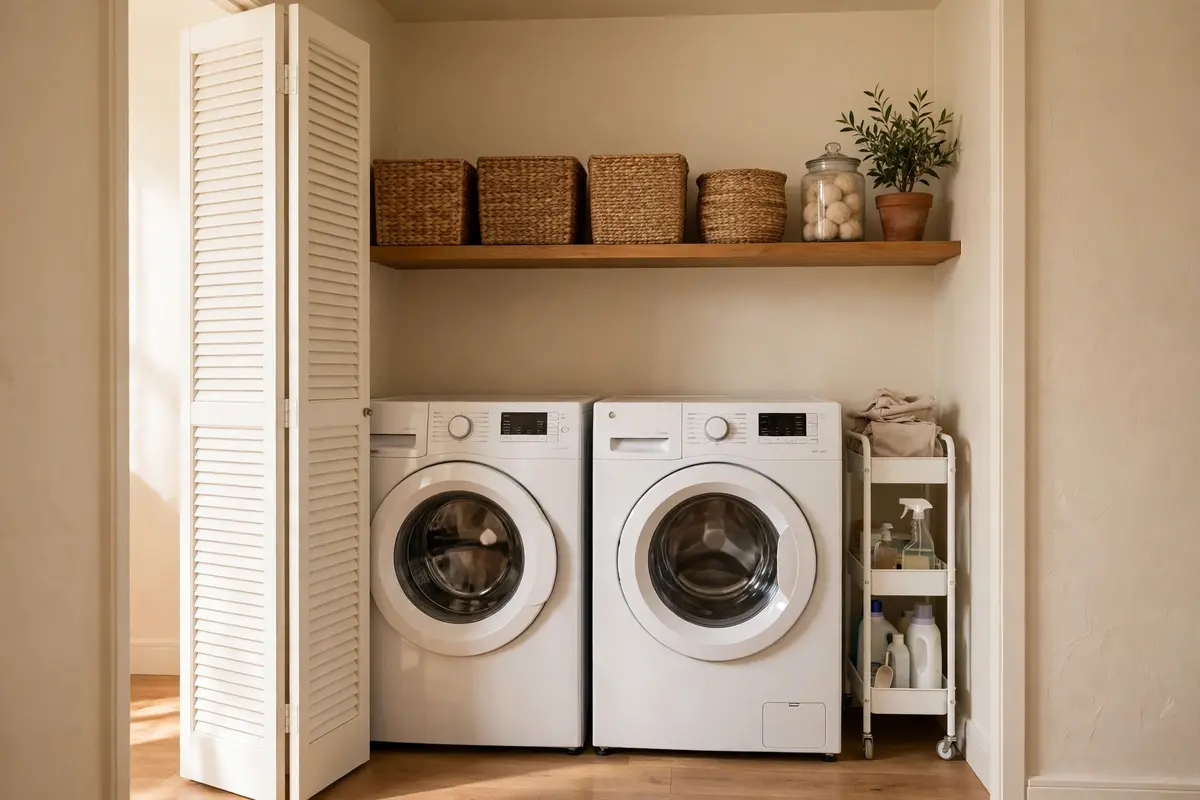
No dedicated laundry room? You can still create a practical laundry zone in a closet, bathroom, kitchen corner, hallway, or even a shared-laundry routine. The trick is to organize around the space you actually have—not to copy a full-size laundry room that will never fit.
These 15 small laundry area organization ideas focus on compact storage, reversible setups, easier sorting, and simple drying options. Some ideas are completely freestanding; others, such as stacking appliances or installing a wall rack, require compatible equipment and permission. Choose only the options that suit your home, lease, and appliance instructions.
Start by Measuring Your Laundry Area
Before buying a cart, shelf, or hamper, measure the space and check your washer and dryer manuals. Appliance dimensions and required clearances vary by model, door style, venting, and installation type, so treat online measurements as planning estimates—not universal rules.
Measure these four things:
- Machine footprint: Width, depth, and height, including hoses, plugs, and any parts that project from the back.
- Side gaps: Measure the narrowest gap beside the machine. A cart advertised as six inches wide may need extra room for handles, wheels, and easy movement.
- Door and walkway clearance: Open the washer, dryer, closet, and bathroom doors fully. Keep the path in front of the machines usable.
- Space above and behind the machines: Top-loaders need room for the lid; dryers and washers need the clearances specified by their manufacturers for ventilation, hoses, and servicing.
Write down the measurements before shopping. Also note outlets, shut-off valves, vents, and service panels. Do not cover them with shelves or baskets.
Closet Conversion Ideas
A laundry closet already has a boundary, so it can be easier to keep supplies contained. Keep the setup simple and leave the machines accessible.
1. Use the Back of the Closet Door
An over-door organizer can hold lightweight items such as lint rollers, mesh laundry bags, stain-treatment tools, and spare clothespins. Check that the hooks fit the door and that the organizer does not stop the door from closing or interfere with appliance controls.
Keep liquids in their original, clearly labelled containers and place them in a secure pocket or separate caddy. Do not put heavy bottles in a flimsy hanging organizer.
2. Create Zones on One Shelf
If there is already a shelf above the machines, divide it into three zones: everyday laundry products, drying and folding accessories, and occasional-use items such as delicates bags. Use small, easy-to-clean bins so products stay grouped instead of spreading across the shelf.
If you need a new shelf but cannot drill, consider a purpose-built freestanding over-appliance frame. Choose one designed for the size and layout of your machines; it should stand securely on the floor rather than rely on the washer or dryer for support. Keep heavy items low and follow the frame’s load limit.
3. Add a Removable Air-Drying Rod—Only Where It Is Secure
A properly fitted tension rod inside a closet can hold a few lightweight garments on hangers. Check the rod’s load rating, fit, and the wall surfaces before use. Do not hang heavy, waterlogged clothes from it, and do not position drying clothes where they block machine ventilation, controls, or access.
If the closet is too shallow or the rod feels unstable, use a freestanding folding rack instead.
4. Slide a Slim Cart into a Measured Gap
A narrow rolling cart can make use of the space beside a washer. Keep detergent and stain-treatment products on a stable middle shelf, and lighter items such as dryer balls or lint bags above or below as the cart design allows.

Measure the actual gap and the cart’s full width, including wheels and handles. Leave enough room to pull the cart out without scraping hoses or blocking a service panel. If the gap is too narrow, a hanging caddy or a small shelf elsewhere is safer than forcing a cart into it.
Corner Nook Ideas
No closet? A small corner can still work if the laundry steps stay in a sensible order: sort, wash, dry, fold, and put away.
5. Stack Compatible Machines to Free Floor Space
Stacking can be useful when you have separate front-load machines, but it is not a universal or automatically renter-safe solution. Confirm that both exact models are approved for stacking, use the specified stacking kit, and follow the manufacturer’s installation instructions. Get the landlord’s permission where required and use a qualified installer if you are unsure.
Never stack appliances that are not designed for it or improvise with a shelf or blocks. The extra vertical space is only useful if the installation is safe and the doors, vents, hoses, and controls remain accessible.
See the manufacturer’s washer-and-dryer stacking guidance as an example of why model compatibility matters.
6. Define the Nook with a Curtain or Folding Screen
A curtain on a suitable tension rod or a lightweight folding screen can make an open laundry corner look intentional. Choose a solution that does not block airflow, access to the appliances, or a required route through the room. Keep fabric well away from hot surfaces and dryer vents.
If the machines need ventilation or the area gets warm, leave the nook open instead of enclosing it. A narrow washable curtain can be useful for visual separation, but it should never substitute for the clearances specified in the appliance manual.
7. Use a Freestanding Folding Drying Rack
When you have no dryer—or prefer to air-dry delicate items—a collapsible rack provides temporary hanging space without wall holes. Set it up where clothes can dry with reasonable airflow and where drips will not damage flooring. Fold it flat and store it behind a door or beside a cabinet when it is not in use.

Avoid overcrowding the rack. Clothes dry more slowly when packed tightly together, especially in humid bathrooms or closets.
8. Build a Small Laundry Command Center
Arrange the corner in the order you use it: hamper for dirty clothes, machine, a stable folding surface, then a basket for clean laundry. If the space is too small for a table, use a lightweight folding board or a clean, dry counter when available.
A simple workflow saves more effort than a dozen matching containers. Keep the items you use every load within reach and store occasional-use products elsewhere.
Bathroom Laundry Ideas
Bathrooms often have hard-to-use corners, but moisture and limited ventilation mean that storage needs a little extra thought.
9. Choose a Freestanding Shelf Frame Beside the Machine
A freestanding frame can hold towels, laundry bags, and supplies without attaching shelves to the wall. Check its footprint, stability, and load rating before placing it beside the washer. Keep the machine’s controls, hoses, and service access clear.
Bathrooms can be humid, so use wipe-clean bins and keep products closed. Do not store cardboard packaging or damp cloths in a closed, poorly ventilated space.
10. Hang the Hamper Instead of Placing It on the Floor
An over-door laundry bag or a removable hook can free up floor space. Check the door’s clearance and the hook’s stated weight limit. A bag full of wet towels can be much heavier than a bag of dry clothes, so do not assume a light-duty adhesive hook will support it.
If a hanging hamper swings into the door or feels unstable, choose a slim freestanding hamper that fits beside the vanity or behind the door.
11. Use Magnetic Holders for Small Metal Items
If the outside of your washer or dryer is magnetic, small magnetic cups or hooks can hold clothespins, mesh bags, or other lightweight accessories. Test the surface with a magnet first and keep the items away from controls, vents, and moving door areas.
Appliance surfaces and vibration vary, so use magnets only for lightweight items that stay securely attached. Do not store liquids or heavy tools on a magnet that could slip.
Kitchen-Adjacent Laundry Ideas
When laundry shares space with the kitchen, the goal is to borrow convenient storage without mixing laundry products into food-preparation areas.
12. Give Laundry Supplies Their Own Lidded Caddy
A handled caddy makes it easy to carry detergent, stain treatment, and a mesh bag to the machine. Store it on a dedicated shelf or in a cupboard away from food, heat, and children or pets. Keep products in their original labelled packaging, and never mix cleaning chemicals.
If you use a shared cleaning-supply cupboard, give laundry products a separate bin so they do not leak onto other items. This keeps the laundry area clear without creating a confusing mix of products.
13. Let a Rolling Cart Double as a Folding Counter
A compact rolling cart or kitchen trolley can provide a temporary surface for folding clothes, then move back against a wall when the task is done. Choose a stable top large enough for the items you fold and shelves that do not wobble when the cart moves.

Keep the route between the laundry area and its storage spot clear. Do not park the cart in front of an appliance door, electrical outlet, vent, or walkway.
Sorting and Shared-Laundry Ideas
If your machines are shared or located in a laundromat, organization begins before you leave home and ends when clean clothes are put away.
14. Use One Bag per Load Type
Keep separate washable bags for everyday clothes, delicates, and bedding—or use a simple lights-and-darks split if that suits your laundry routine. Pre-sort as clothes come off, then take only the bag you need on laundry day.
Store the bags on a closet shelf, in a basket, or on suitable hooks. For more ideas on making a small closet work harder, see Small Closet Storage for Renters.
15. Combine Laundry and Cleaning Gear in One Narrow Station
A small utility station can keep a laundry caddy, lint supplies, reusable cloths, and a cordless vacuum together. Use separate bins for laundry products and general cleaners, and store chemicals securely away from children and pets. Keep the vacuum and its charging equipment in line with the manufacturer’s instructions.
If you are planning a broader cleaning corner, our guide to Where to Store a Vacuum in a Small Apartment can help you choose a suitable spot. You can also use the storage zones in How to Store Cleaning Supplies in a Small Apartment.
No Washer or Dryer? Build a Portable Laundry Zone
If laundry happens in a shared building facility or at a laundromat, a permanent laundry corner may waste space. Instead, set up a portable system with three jobs: collect clothes, transport them and return clean laundry to its final storage.
Planning example: keep a collapsible hamper in a bedroom corner and a small bag containing detergent in its original packaging, a stain-treatment item, coins or payment card where needed, and a laundry checklist. After the trip, fold and put away clothes before returning the empty hamper. Reserve a dry location for the hamper so damp towels do not remain sealed inside.
With an in-unit machine: decide where dirty items wait and where clean clothes are folded without blocking the washer door. Measure any proposed cart with the appliance doors fully open, and follow the exact washer and dryer manuals for ventilation, stacking and access. Do not put shelves directly on appliances unless the manufacturer specifically allows that arrangement.
The deciding question: where can you move from dirty laundry to clean storage with the fewest temporary piles? Your answer may be a portable basket, not a room makeover. For the recurring routine around laundry day, use the Weekly Cleaning Schedule; for occasional deeper cleaning, use the Room-by-Room Cleaning Checklist.
Where should I keep laundry detergent if I use a laundromat?
Keep it closed, upright and in its original labeled container in a secure dry location. Transport only the quantity you need, and keep it inaccessible to children and pets.
What Not to Do in a Small Laundry Area
- Do not block vents, hoses, shut-off valves, or service panels. These must remain accessible, and appliance ventilation requirements vary by model.
- Do not overload shelves above a vibrating machine. Use a stable frame or shelf rated for the load, and keep heavy bottles low.
- Do not stack appliances without approval and the correct kit. Improvised stacking can allow a machine to shift or fall.
- Do not rely on adhesive hooks for heavy wet laundry. Follow the hook’s load rating and surface requirements.
- Do not decant products into unlabelled containers or mix chemicals. Keep laundry and cleaning products in their original containers, closed and stored securely.
- Do not buy organizers before measuring. Check the full product dimensions, including wheels, handles, door swing, and room needed to pull it out.
Frequently Asked Questions
How Do I Organize Laundry When I Have No Laundry Room?
Start with one defined zone, such as a closet, bathroom corner, or rolling cart beside the machines. Keep only everyday products nearby, use a hamper that fits the available footprint, and choose a foldable drying rack if you need drying space.
Can I Put a Washer and Dryer in a Closet?
Some models and building layouts allow closet installations, but ventilation, clearances, door openings, electrical or gas connections, and local requirements vary. Check the appliance installation instructions and ask your landlord or a qualified installer before changing the setup.
What Is the Best No-Drill Laundry Storage Idea for Renters?
A freestanding shelf frame, slim rolling cart, folding drying rack, or handled caddy is often a good starting point because it can be moved. Check stability and load ratings, and remember that over-door and adhesive products still need suitable doors or surfaces.
How Much Space Should I Leave Around My Washer and Dryer?
There is no single clearance that suits every appliance. Use the dimensions and installation clearances in the manuals for your exact models, including space for hoses, ventilation, door movement, and servicing.
The Bottom Line
A dedicated laundry room is helpful, but it is not essential. A closet shelf, a narrow cart, a folding rack, or a well-planned shared-laundry bag system can make laundry easier without filling your home with organizers. Start by measuring, choose one setup that fits your actual layout, and keep access, ventilation, and safe storage ahead of appearance.
If you are also organizing the rest of a small home, see Small Bathroom Storage Without Cabinets for more compact storage ideas.