
No medicine cabinet. No vanity drawers. Maybe not even a shelf. Just a pedestal sink, a narrow floor, and toiletries collecting along the counter edge.
You don’t necessarily need a bigger bathroom—or twelve new organizers. Good small bathroom storage starts with a plan for what stays in the room, where each category belongs, and which storage solutions suit a rental. This small bathroom storage without cabinets guide starts with a quick clear-out, then uses five practical zones: the door, the walls, above the toilet, beside the sink, and inside the shower.
Quick answer: Use the back of the door for towels and lightweight accessories, a slim cart for everyday toiletries, and appropriately secured over-toilet shelving for spare supplies. Choose moisture-compatible products for wet areas, measure before buying, and keep bulky backups somewhere dry. Check your lease and the manufacturer’s installation instructions before mounting anything.
Before You Buy: Measure the Space You Actually Have
The best organizer is the one that fits without blocking a door, a toilet, a shut-off valve, or the path to the shower. Grab a tape measure and write down these five details:
Door clearance: Measure the gap between the top of the door and its frame before choosing an over-door rack. Also check whether the rack would hit the wall or a nearby fixture when the door swings.
Narrow floor gaps: Measure width, depth, and height beside the sink or toilet. A cart advertised as “slim” may still be too wide once you include its wheels and handle.
Over-toilet space: Record the available width, the tank height, the location of the flush button or lever, and clearance for opening the tank lid.
Wall surface: Note whether you have smooth glazed tile, glass, painted drywall, or textured tile. Mounting products are not interchangeable across these surfaces.
Shower layout: Check the showerhead, curtain or door swing, and any areas that must remain accessible for cleaning.
Measuring the gap above a bathroom door before selecting over-the-door storage
A useful shopping habit: Take the measurements and a photo of each gap with you. Compare them with the product’s assembled dimensions, not just the packaging photo.
Start by Owning Less in the Bathroom
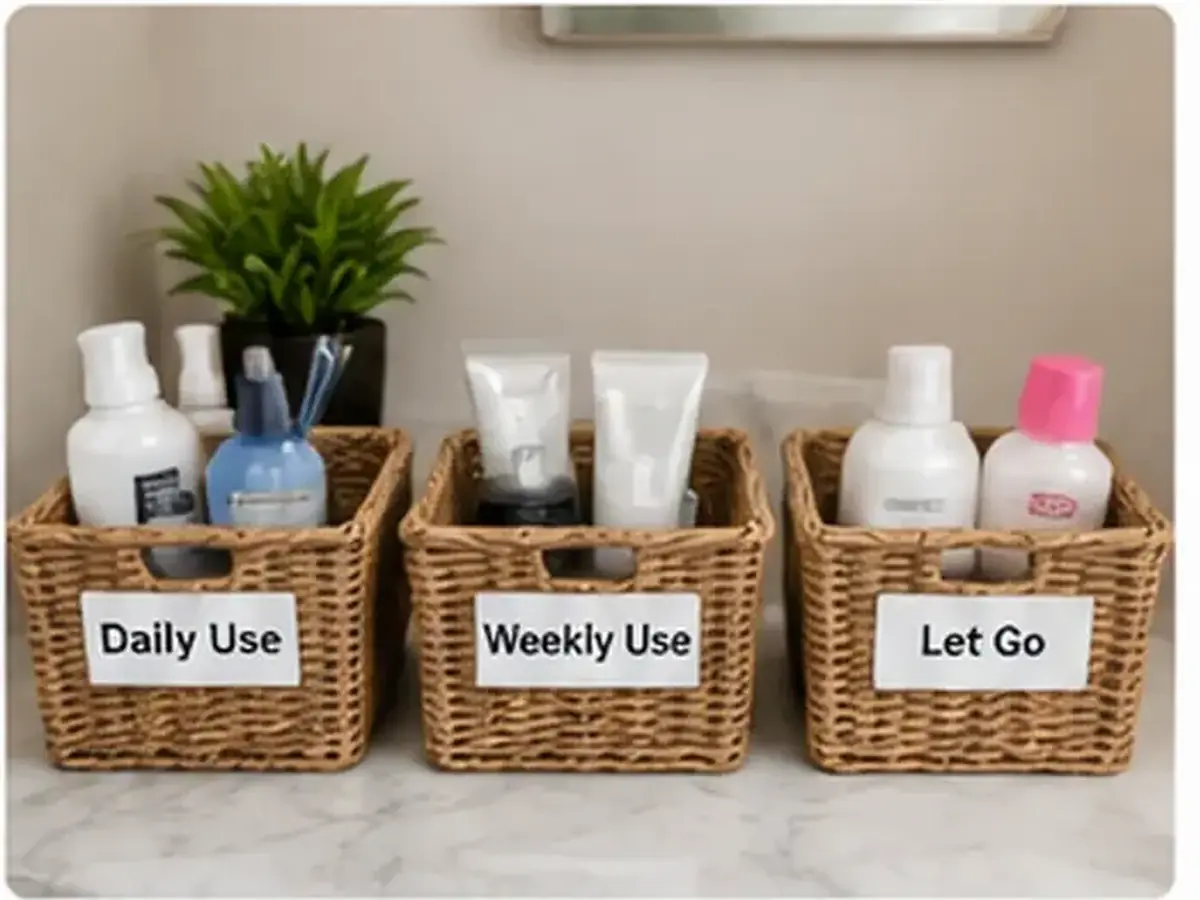
Every bottle kept in a cabinet-free bathroom competes for visible space — that’s the fundamental challenge of small bathroom storage. Before buying anything, empty the countertop and sort the contents into three groups:
1. Daily use: Toothbrush, toothpaste, deodorant, and the skincare items you actually use every day.
2. Weekly use: Hair tools, grooming accessories, and treatments used occasionally.
3. Move, recycle, or dispose: Expired products, empty packaging, unwanted duplicates, and bulk refills that can live elsewhere.
Three baskets sorting bathroom products into daily use, weekly use, and items to remove
Check product dates and local disposal instructions rather than putting every unwanted item straight into the trash. The goal isn’t to own a particular number of products. It’s to give the things you genuinely use a convenient, safe home.
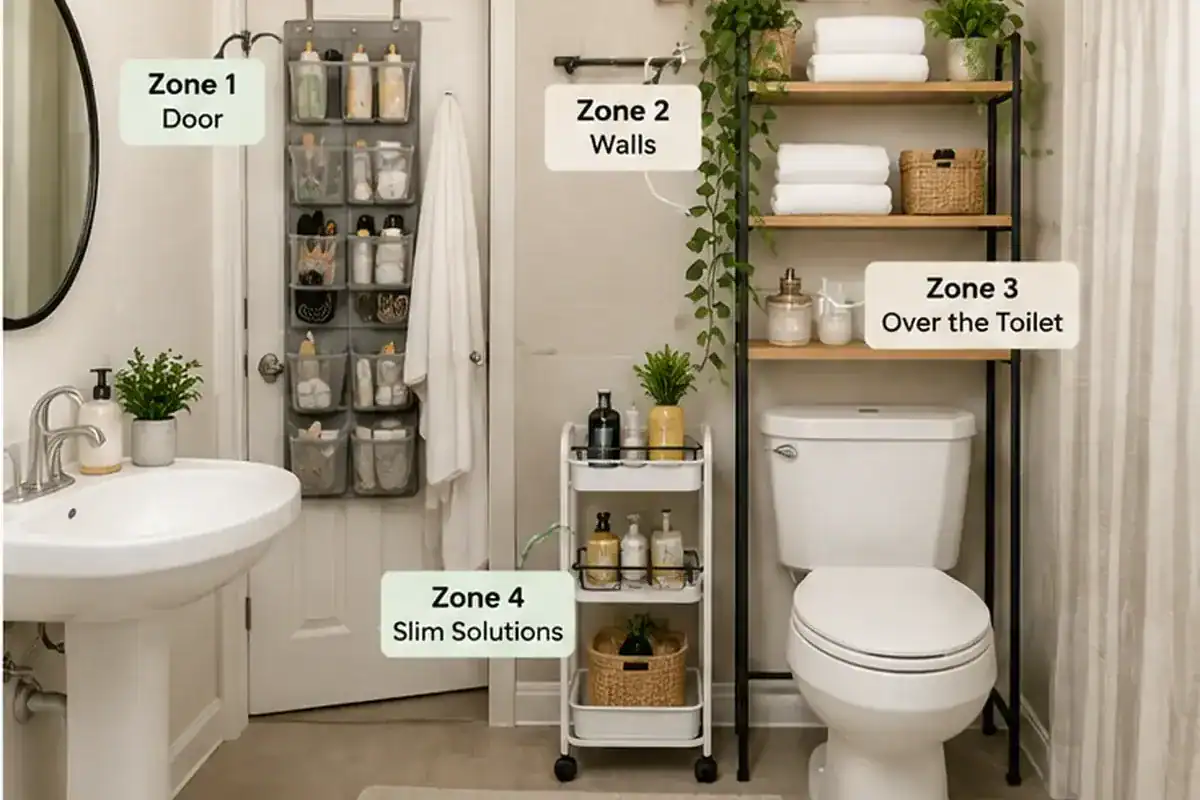
Zone 1: Use the Back of the Door
An over-the-door organizer can free up the sink area without using floor space or drilling holes. It works especially well for lightweight things that otherwise migrate around the room.
Hook rack: Hang a robe, a towel in use, or a small toiletry bag.
Pocket organizer: Separate hair ties, brushes, cotton pads, and other dry accessories into visible compartments.
Small hanging basket: Hold light, non-breakable supplies that won’t spill when the door moves.
An over-the-door pocket organizer for small bathroom accessories
Before installing: Test that the door opens and latches fully. Use protective pads if permitted to avoid rubbing the paint. Respect the organizer’s load limit, keep heavier items low, and avoid hanging glass bottles where the door could swing them into the wall. If a door-mounted organizer blocks the doorway, use a narrow freestanding option instead.
Zone 2: Make Wall Space Work—Without Assuming Every Adhesive Will Hold
Wall storage is one of the most effective small bathroom storage strategies when floor area is almost zero — but installation method matters more than appearance.
Bathroom-rated adhesive hooks or baskets may suit light items on compatible, clean, smooth surfaces. Check the exact manufacturer’s guidance for surface type, humidity, cure time, and weight capacity. Don’t invent a safety margin such as “half the advertised load”—the product’s instructions are the starting point, and some surfaces are not suitable at all.
Suction organizers can be useful on compatible smooth, nonporous surfaces. They are less dependable on grout lines and textured finishes. Inspect them regularly, and never use them to hold fragile or hazardous items.
Tension-mounted systems can avoid drilling when installed between suitable surfaces. Check the permitted span and load, and don’t assume a generic curtain rod is safe to use as a loaded shelf.
Properly mounted shelves can offer more storage, but require landlord permission when drilling is involved. Use the hardware and anchoring method specified for the wall and shelf. Ordinary adhesive strips are not a substitute for structural shelf supports.
Compact bathroom wall storage with shelves and hanging baskets
If you’re renting and can’t mount anything safely, a cart or an over-door organizer may be the better choice.
Zone 3: Store Spares Above the Toilet—Safely
The area above the toilet can hold spare toilet paper, folded towels, and a small basket of occasional-use products. An over-toilet shelving unit is often easier to fit than a full cabinet, but freestanding does not mean tip-proof.
Before buying, measure the toilet tank, the space around the unit’s legs, and the room needed to operate the flush. Follow the manufacturer’s instructions for stability and any required wall anchoring. If the unit requires an anchor and your rental doesn’t allow it, choose a different storage solution rather than skipping the anchor.
An over-toilet shelving unit with towels and baskets
Keep heavier items low, avoid placing breakable objects directly over the toilet, and leave enough access for cleaning and maintenance. The U.S. Consumer Product Safety Commission recommends securing furniture to reduce tip-over hazards; its Anchor It guidance is a useful reference.
Zone 4: Use the Slim Gap Beside a Pedestal Sink
A pedestal sink has little built-in storage, but a narrow floor gap may be enough for a compact organizer.
Slim rolling cart: Useful for frequently reached-for toiletries, spare rolls, and lightweight bins. Check the actual width including wheels.
Narrow freestanding tower: Provides vertical storage where the floor footprint is small; follow any anti-tip instructions.
Small washable basket: Can hold a limited set of items beneath a wall-mounted sink if it stays dry and doesn’t block plumbing.
Pedestal-compatible cabinet: Gives a concealed look, but only if the cutout, pipes, and clearances match your sink.
A narrow rolling storage cart beside a pedestal sink

Leave shut-off valves, drains, and floor areas that need regular cleaning accessible. Avoid storing absorbent fabric bins where splashes routinely reach them. If there is no safe floor gap, use the door or move backups to a nearby closet.
Zone 5: Give Shower Essentials Their Own Home
Shampoo, conditioner, body wash, and razors are easiest to manage close to where they’re used—but not every organizer belongs in a wet area.
A shower-rated tension caddy can work when its installation surfaces and load limits are suitable. A showerhead caddy must be compatible with the fixture and should not interfere with plumbing or controls. Suction baskets are an option only where the manufacturer approves the surface and wet conditions.
A corner shower caddy holding a small selection of toiletries
Keep bottles off the shower floor where practical, leave drainage openings clear, and remove organizers periodically to clean trapped moisture. Don’t overload caddies or position them where they could fall onto someone.
Which Storage Option Is Best?
| Storage solution | Best for | Check before buying |
|---|---|---|
| Over-door organizer | Towels and light accessories | Door gap, swing, and weight limit |
| Slim rolling cart | Daily toiletries | Full width, wheels, floor clearance |
| Over-toilet shelving | Towels and spare supplies | Dimensions, stability, anchoring |
| Tension shower caddy | Shower essentials | Compatible surfaces, span, load |
| Bathroom-rated adhesive hook | Lightweight items | Approved surface, moisture conditions |
| Pedestal-sink cabinet | Hidden storage | Plumbing cutout and access |
Best starting point for most renters: Try an over-door organizer and one appropriately sized freestanding cart before buying multiple wall-mounted pieces. They are easy to reposition, and you’ll quickly learn whether you need more storage at all.
The 4-Question Test Before You Buy Bathroom Storage
Planning example: a bathroom has a pedestal sink, a door that swings inward and a narrow space beside the toilet. Before shopping, measure the door’s swing, the gap beside the toilet, the flush access and the shower splash zone. The best option might be no additional furniture at all: a hook outside the wet zone for one towel, a compact daily-items basket and a dry backup bin elsewhere.
The bathroom storage test: can you reach everyday items with one hand? Can towels and brushes dry? Can the floor still be cleaned and the toilet serviced? If any answer is no, change the layout before buying another organizer. Use the Bin-Fit Calculator to check whether a bin actually fits the gap you measured.
Do closed baskets help prevent moisture damage in small bathrooms?
Not for damp items. Closed storage can trap moisture. Dry items thoroughly, maintain ventilation and choose materials compatible with the room’s conditions.
What Holds Up in a Humid Bathroom?
Steam and splashes can affect adhesives, metal finishes, wood products, and fabrics — which is why small bathroom storage needs moisture-aware product choices. Instead of relying on a universal ranking, match the organizer to its environment:
Near the shower: Choose products explicitly rated for wet use and corrosion resistance.
On tiled walls: Follow the product’s instructions for the specific tile finish and grout conditions.
On painted walls: Don’t assume an adhesive labeled “bathroom” is compatible with your paint.
On the floor: Look for washable, moisture-tolerant materials and leave space to mop and dry the area.
For tall shelving: Stability and manufacturer-required anchoring matter more than whether a unit is described as freestanding.
Wipe down damp organizers and check their fixings periodically. If a hook, shelf, or caddy starts slipping, remove the load rather than repeatedly putting it back without addressing the cause.
Move the Overflow Out of the Room
Effective small bathroom storage doesn’t mean keeping a bulk purchase of everything inside the room. Keep one or two spare toilet-paper rolls within reach and move the rest to a nearby closet. Store extra towels, unopened refills, and occasional-use supplies somewhere clean and dry.
Keep cleaning products in their original labeled containers, away from toiletries and out of reach of children and pets. A dedicated caddy in a secure storage location is safer than scattering bottles among personal-care products. For more ideas, see How to Store Cleaning Supplies in a Small Apartment Without a Utility Closet.
A note on medicines: Heat and moisture can affect some medications. Follow each product’s labeled storage conditions and keep medicines secure and inaccessible to children. The U.S. Food and Drug Administration advises that a damp bathroom cabinet is not a good storage place for many medicines.
A Simple 20-Minute Bathroom Reset
You can test the system without shopping for anything:
1. Minutes 0–5: Empty the counter, discard empty packaging, and identify expired items for appropriate disposal.
2. Minutes 5–10: Group daily, weekly, and backup products.
3. Minutes 10–15: Assign daily items to one accessible spot and move backups outside the bathroom.
4. Minutes 15–20: Measure the remaining gaps, photograph them, and write a short shopping list only for the storage you still need.
After a week, notice what keeps returning to the counter. That item needs a more convenient home; it doesn’t necessarily need a larger organizer.
Frequently Asked Questions
How do you store toiletries in a bathroom with no cabinets?
For small bathroom storage without cabinets, use a small tray for the few items you reach for daily, an over-door pocket organizer for dry accessories, and a narrow cart if you have floor space. Move bulk refills and rarely used products outside the room.
Will an over-door organizer stop my bathroom door from closing?
It can. Measure the gap at the top of the door, account for the thickness of the hooks, and test the door swing before loading the organizer. If the door doesn’t close normally, use another storage option.
What’s the safest way to use space above the toilet?
Choose a unit that fits the tank and room, and install all manufacturer-required anti-tip hardware. If secure installation isn’t possible, keep the area clear or use lower storage elsewhere.
Can I use adhesive shelves in a rental bathroom?
Only when the product is approved for the wall surface, moisture conditions, and intended load. A bathroom label alone does not make every shelf safe. Never substitute general-purpose adhesive strips for structural mounting hardware.
Where should towels go when there’s no linen closet?
Hang the towel in use where it can spread out and dry with good airflow. Keep clean spares in a dry drawer, basket, or nearby closet. A hook is convenient, but a bar that lets a towel hang open may dry it more effectively.
How can I keep the sink counter clear?
Give daily items one small tray or accessible organizer and move everything else to its assigned zone. If the tray repeatedly overflows, reconsider which items truly need to remain on the counter.
The Bottom Line
Small bathroom storage without cabinets works best when you reduce what lives in the room, measure first, and assign each item a zone. Start with the door and a slim cart, use walls only with appropriate installation methods, secure tall shelving properly, and choose wet-area products for the shower.
You don’t need to fill every inch. A clear sink, a safe walkway, and a few easy-to-reach essentials are the signs that your system is working.
For the rest of the apartment, try our Weekly Cleaning Schedule for Small Apartments.
Related Guides
How to Store Cleaning Supplies in a Small Apartment Without a Utility Closet
Weekly Cleaning Schedule for Small Apartments + Free Printable
Under-Sink Organization for Small Rental Kitchens: Practical Ideas Around Pipes
15 Small Laundry Area Organization Ideas When You Don’t Have a Laundry Room
Editorial sources
U.S. Consumer Product Safety Commission — Anchor It
U.S. Food and Drug Administration — Don’t Be Tempted to Use Expired Medicines