
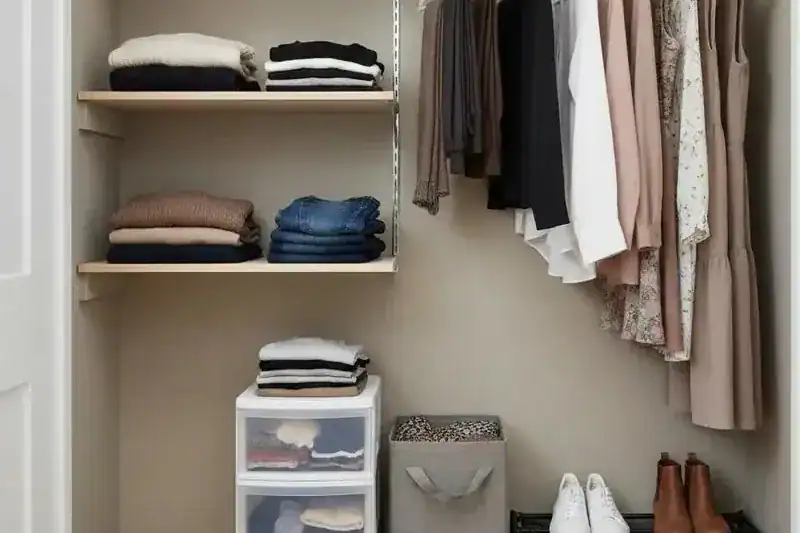
A small reach-in closet can feel full before you’ve even finished putting your clothes away. There’s one hanging rod, a shelf that’s hard to reach, a crowded floor, and somehow never enough room for shoes, bags, or the coat you wear every day.
If you’re renting, the usual closet makeover advice doesn’t always help. Installing built-in drawers, drilling new shelves into the walls, or replacing the entire closet system may not be possible—or worth the expense.
The good news is that small closet storage doesn’t have to start with a renovation or a shopping trip.
A more useful approach is to work with the space you already have. By dividing your closet into four practical storage zones, you can make everyday items easier to reach, reduce overcrowding, and avoid buying organizers that don’t fit.
This guide walks through a renter-friendly reach-in closet system, including what to measure, where to put your clothes, when double-hanging makes sense, and how to organize a small closet on a budget.
Quick Answer: How Do You Organize a Small Closet Without Drilling?
Start by removing items you no longer use and moving out-of-season clothing into suitable storage elsewhere. Then divide your closet into four zones:
- Top shelf: Lightweight seasonal items and less frequently used accessories.
- Hanging rod: Everyday clothing, arranged by length and frequency of use.
- Closet floor: Shoes, low storage bins, and items that are easy to pull out.
- Door and side space: Lightweight accessories, when the door design and clearance allow.
Use existing shelves, removable organizers, and freestanding storage before considering additional hardware. Always check product load limits, closet dimensions, and rental restrictions.
Measure Your Reach-In Closet Before Buying Anything
A storage organizer can look perfect online and still be completely wrong for your closet.
A narrow shoe rack might prevent the door from closing. A hanging organizer might drag across the floor. An extra clothing rod might leave too little space for shirts to hang properly.
Before buying anything, take these six measurements:
- Inside width: Measure the usable width between the closet walls.
- Inside depth: Measure from the back wall to the front opening, allowing for the doors.
- Rod height: Measure from the floor to the existing hanging rod.
- Top-shelf space: Measure the distance between the shelf and ceiling.
- Longest garment: Measure the hanging length of your longest coat, dress, or other clothing.
- Door clearance: Check how the doors open and whether anything attached to them would interfere.
Measure the actual usable space rather than relying on the closet’s outside dimensions. Good small closet storage starts with knowing your exact dimensions, not guessing.
For example, if you have a narrow gap beside your hanging clothes, a slim vertical organizer may be more useful than a wide storage cube. But if the organizer blocks access to the back of the closet, it won’t solve the problem.
The goal is to fit storage around your clothes—not force your clothes around new storage products.
Step 1: Declutter Before You Add Storage
The first step in small closet organization is deciding what deserves space in the closet.
Take everything out if you have enough room to sort it safely. Otherwise, work through one section at a time.
Separate your belongings into four groups.
Keep in the Closet
These are the clothes, shoes, and accessories you currently use.
Prioritize items that fit, suit your routine, and make sense for the present season.
Store Elsewhere
Move rarely used luggage, spare bedding, and off-season clothing to another suitable location if you have one.
Under-bed storage, a dresser, or a separate shelf may be more practical than keeping everything inside one reach-in closet.
Donate or Sell
Set aside usable clothing that no longer fits your needs.
Avoid keeping items indefinitely just because you might wear them someday.
Repair or Discard
Separate damaged clothing that needs repair from items that are no longer usable.
Follow local textile recycling or disposal options where available.
Rotate Clothes With the Seasons
Seasonal rotation is particularly useful when you have limited hanging space.
Keep the clothing you currently need within easy reach. Store other seasonal items in clean, dry containers where the materials can be protected.
The timing depends on your local climate. When colder weather approaches, bring frequently worn coats forward rather than automatically storing them away.
Before packing anything, make sure it’s clean and completely dry.
You don’t need to own fewer clothes than you’re comfortable with. You need a system that separates what you’re using now from what can safely wait.
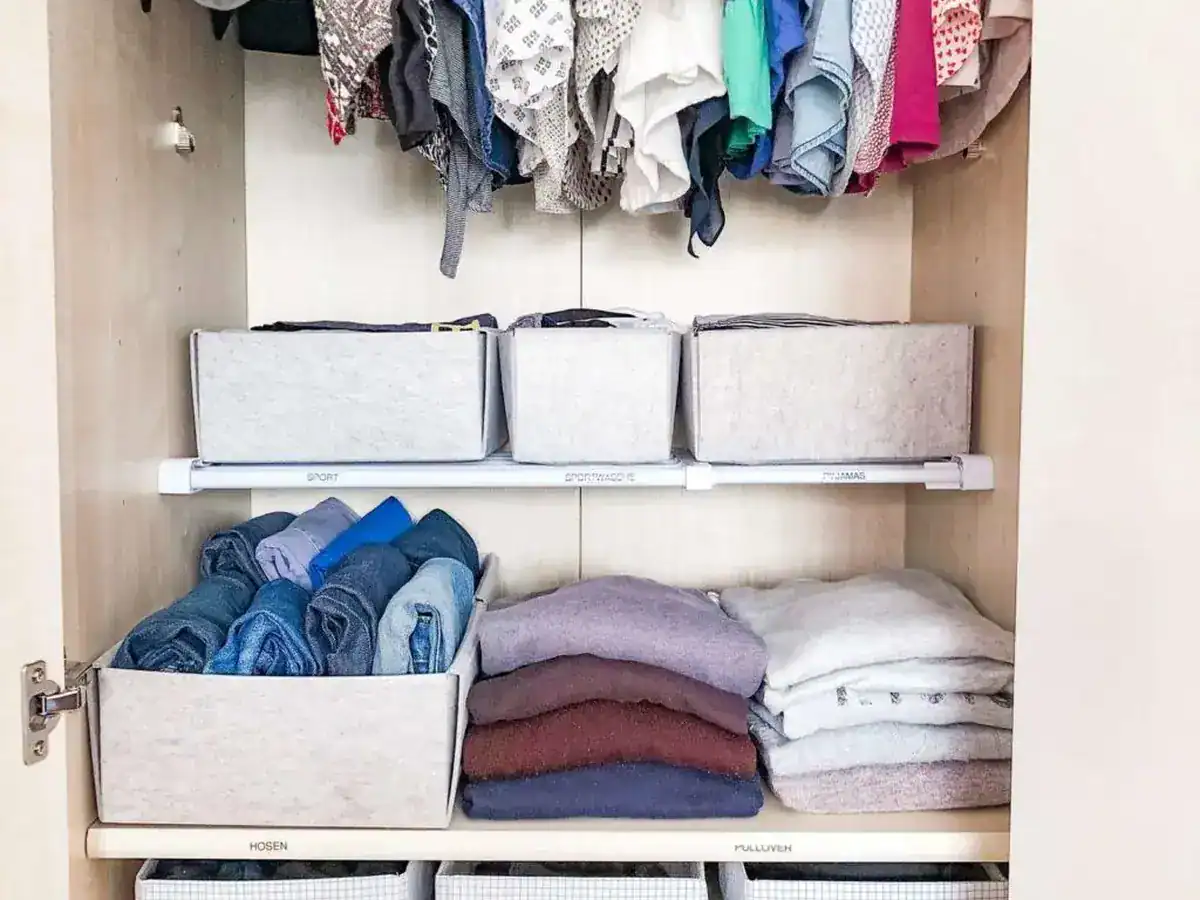
Step 2: Organize Your Closet Into Four Storage Zones
Once you’ve decided what stays, assign every item a place.
The four-zone system works with the existing structure of many apartment reach-in closets.
Zone 1: Use the Top Shelf for Less-Frequently Used Items
The top shelf is valuable storage, but it shouldn’t become a pile of things you can’t find.
Use it for lightweight items that don’t need daily access, such as:
- Out-of-season accessories
- Extra scarves and hats
- Small fabric storage bins
- Folded clothing that doesn’t fit comfortably elsewhere
Group similar items in containers and label them clearly.
A soft-sided bin can be easier to handle than a heavy rigid box, especially when you’re reaching above shoulder height.
Avoid stacking containers so high that they become unstable or difficult to retrieve.
Keep heavy objects off high shelves unless the shelf is specifically designed and rated to support them.
Budget Tip: Reuse Containers You Already Own
You may already have suitable storage containers at home.
Clean shoe boxes can hold lightweight accessories on a dry shelf. Existing fabric bags can separate scarves or seasonal items.
Cardboard is less suitable for damp areas or places where moisture could collect, so inspect the closet conditions before using it.
Don’t buy matching baskets just to make the closet look organized. Consistent labels and easy access matter more.
Zone 2: Make the Hanging Rod Work Harder
The hanging rod is usually the most crowded part of a small reach-in closet.
Instead of adding more hangers immediately, start by arranging clothing according to length.
Place shorter items such as shirts and jackets together. Keep longer garments in a separate section so they can hang freely.
This can reveal usable space below shorter clothing. This kind of small closet storage thinking — fitting storage around your clothes — saves more space than any single product.
Use Slim Hangers When They Make Sense
Slim hangers may reduce the space taken up by bulky hangers, especially if your closet contains many lightweight shirts or blouses.
However, they aren’t suitable for every garment.
Heavy coats and structured jackets may need stronger or broader hangers to maintain their shape.
Choose hangers based on the clothing you own rather than replacing every hanger automatically.
The Double-Hang Trick: When It Actually Works
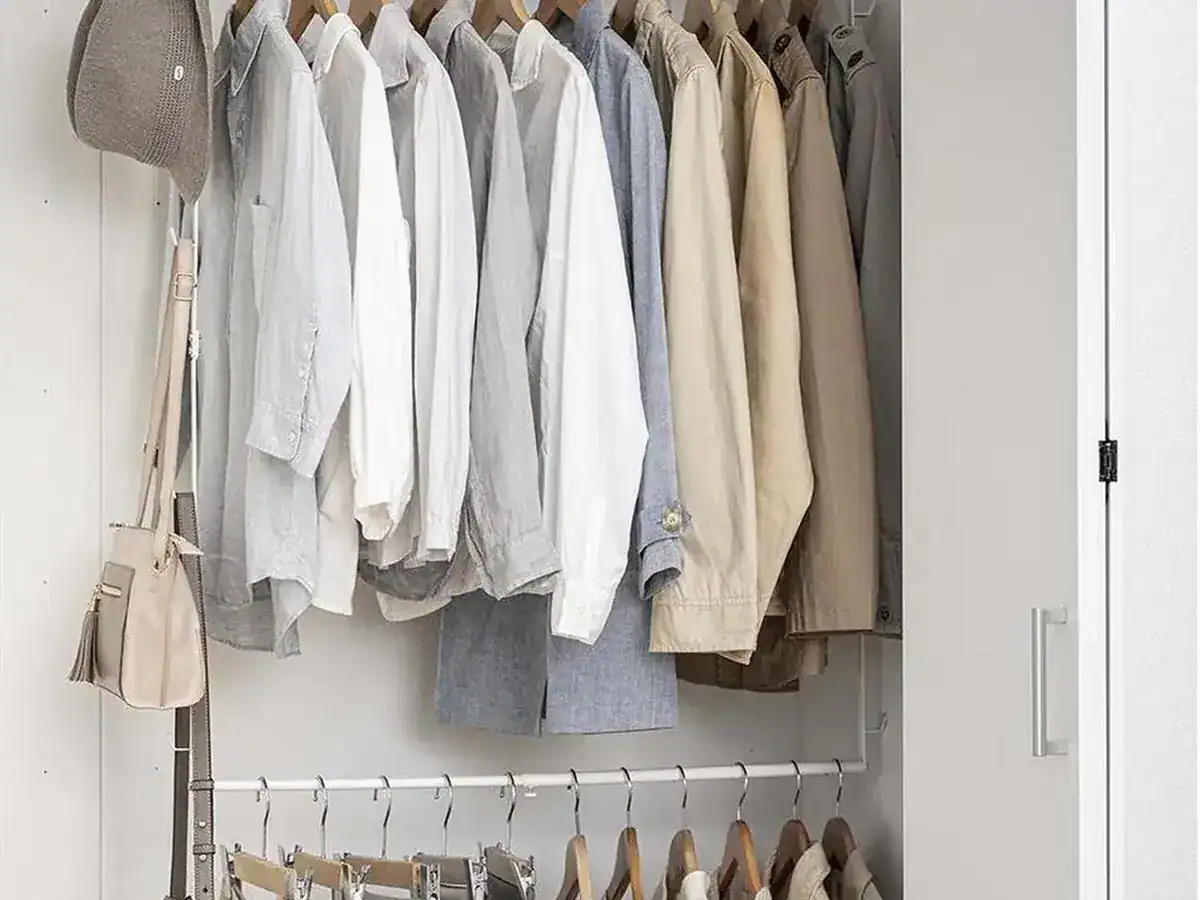
Adding a second hanging level can create more usable rod space, but it doesn’t automatically double your closet’s capacity.
There are two common approaches:
A suspended rod extender hangs from an existing closet rod and creates a lower level for shorter garments.
This can work well when you have enough vertical clearance and the existing rod and its supports can safely carry the combined load.
A wall-to-wall tension rod uses pressure between suitable opposing surfaces.
It requires compatible surfaces, a correct installation span, and sufficient load capacity. Not every closet is suitable for this arrangement.
Before using either option:
- Check the manufacturer’s installation and weight instructions.
- Confirm the existing rod and supports can handle any additional load.
- Measure the space required for clothes on both levels.
- Keep long garments out of the lower hanging area.
- Avoid placing heavy coats on a lightweight secondary rod.
If your closet is too short or already heavily loaded, skip double-hanging.
A better arrangement may be to keep one hanging rod and use a low shoe organizer beneath shorter clothes.
More hanging hardware isn’t useful if it makes the closet unsafe or difficult to use.
Zone 3: Turn the Closet Floor Into Organized Storage
The closet floor often collects everything that doesn’t have another home.
Shoes, shopping bags, loose boxes, and forgotten accessories gradually turn this space into an obstacle.
Instead, give the floor a specific purpose.
Start With Your Everyday Shoes
Keep the shoes you wear most often in an accessible section.
A low shoe rack can work if it fits beneath hanging clothes without crushing garments or blocking the doors.
If a rack won’t fit, place frequently worn shoes in a neat row and move less-used pairs elsewhere.
Use Pull-Out Bins for Small Items
A low bin can hold items that don’t need to be hung, such as workout accessories or small bags.
Choose a container that you can remove without shifting everything around it.
Avoid stacking heavy boxes in a way that makes lower items difficult to reach.
Protect Items From Moisture
Before storing clothing, cardboard, or fabric containers on the floor, check for condensation, leaks, and dampness.
If the closet floor is prone to moisture, avoid keeping absorbent belongings directly against it.
Never block access to electrical equipment, vents, or maintenance panels if your closet contains them.
Zone 4: Use the Door and Side Space Carefully
The back of a closet door can provide extra storage for accessories, but only when the door design allows it.
An over-the-door organizer may hold lightweight items such as belts, scarves, or small bags.
Before installing one, check the clearance above the door and make sure the organizer doesn’t scrape the frame or prevent proper closing.
Avoid overloading door-mounted storage or allowing heavy items to swing when the door opens.
What If You Have Sliding Closet Doors?
Sliding doors generally aren’t suitable for the same organizers used on standard hinged doors.
Instead, consider:
- Hooks already installed inside the closet
- A small hanging accessory organizer on the existing rod
- A narrow freestanding organizer in an accessible corner
Don’t attach accessories where they could interfere with sliding tracks, rollers, or door movement.
Use Side Space Only If It’s Accessible
A narrow gap beside hanging clothes may hold a slim organizer or a small accessory basket.
But storage behind an awkward corner isn’t useful if you have to remove half the closet to reach it.
Keep daily items in the easiest-to-access locations.
Three Small Closet Layouts That Work for Different Rentals
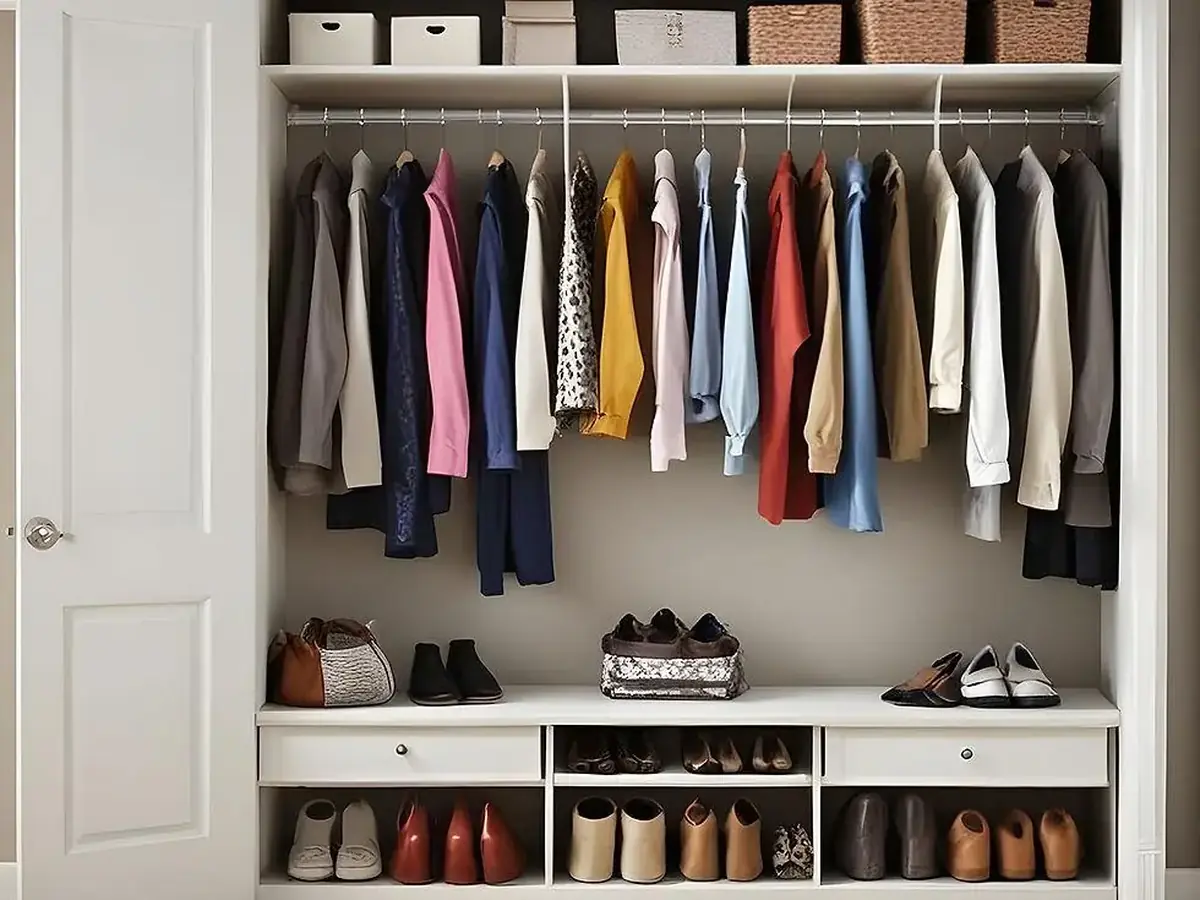
Not every reach-in closet has the same shape.
These three arrangements help you adapt the four-zone system to the space you actually have.
Layout 1: A Narrow Closet With One Hanging Rod
Best for: A single renter with limited width.
Use the existing rod for daily clothing, keeping shorter items together.
Store lightweight seasonal accessories on the top shelf. Use the floor for a small number of frequently worn shoes.
If there’s enough vertical clearance and the rod supports are suitable, consider a manufacturer-approved suspended rod extender for lightweight, short garments.
Otherwise, keep the single rod and prioritize easier access.
Layout 2: A Shared Closet for Two People
Best for: Couples or roommates sharing limited closet space.
Divide the hanging rod into clearly defined sections.
Give each person an accessible area for frequently used clothing, and agree on which parts of the top shelf and floor are shared.
Use separate small containers for accessories rather than mixing everything together.
The goal isn’t necessarily an exact 50/50 split. It’s a layout both people can maintain without constantly moving each other’s belongings.
Layout 3: A Closet With Long Coats or Dresses
Best for: Renters who need full-length hanging space.
Reserve one section of the rod for long garments.
Keep shorter clothes together in the remaining section, with suitable low storage beneath them if space permits.
Avoid placing a second rod where it would cause coats or dresses to bunch up.
This layout may provide less total storage than a double-hang setup, but it protects clothing and keeps the closet easier to use.
Example: Plan a Four-Zone Closet Before Buying Organizers
Hypothetical closet, not a measured home: imagine a reach-in closet 48 inches wide, 24 inches deep and 84 inches high, with one hanging rod and a shelf. List the longest garment first. If coats require nearly the full hanging height, a second rod underneath them would be inconvenient or unusable. Reserve that segment for long clothes and use any remaining section for shorter shirts.
Fill out a sample measurement sheet with these hypothetical numbers before buying anything, and use it to show why you reject one organizer and choose another. Label it a design demonstration, not a firsthand closet makeover. Use the Bin-Fit Calculator to check whether floor bins fit the space you measured.
Small Closet Organization on a Budget
A useful closet system doesn’t require matching containers or an expensive modular installation.
Effective small closet storage on a budget means buying last, not first. Start with what you already own.
| Storage problem | Budget-first solution | When to consider an upgrade |
|---|---|---|
| Small accessories get lost | Reuse a clean box or existing pouch | Add a divided organizer if needed |
| Shoes crowd the floor | Keep daily pairs together and relocate extras | Try a low rack after measuring |
| Clothes are hard to find | Group by type and frequency of use | Consider suitable slim hangers |
| Top shelf is messy | Reuse lightweight labeled containers | Buy fitted bins if necessary |
| Hanging space is limited | Separate short and long garments | Consider a rated rod extender |
| Seasonal clothes take over | Move clean, dry off-season items to existing storage | Add protective containers if needed |
Buy organizers last.
Live with the reorganized closet for several days before deciding what still needs improvement.
That gives you time to notice whether a particular storage problem actually requires a product.
If you do buy something, prioritize correct dimensions, durability, and ease of use over appearance alone.
What Shouldn’t Be Stored in a Small Clothes Closet?
A closet may be the only available storage area in a small apartment, but not everything belongs beside your clothing.
Cleaning Chemicals Mixed With Clothing
Avoid placing leaking or improperly secured cleaning products near fabrics and personal belongings.
Keep household chemicals in their original labeled containers, following product storage instructions and keeping them inaccessible to children and pets.
For safer alternatives in apartments without a utility closet, see our guide to storing cleaning supplies in a small apartment.
Damp Shoes and Clothing
Allow wet items to dry appropriately before placing them in enclosed storage.
Trapped moisture can create unpleasant odors and damage stored belongings.
Heavy Boxes on High Shelves
Store heavy items low, where practical, and respect the shelf’s load capacity.
Don’t use an unstable chair to reach overhead storage. Use a suitable, stable step stool when needed.
Items You Can’t Easily Access
If you have to dismantle your closet to retrieve an item, its storage location probably needs reconsidering.
Keep the items you use most often within comfortable reach.
How to Keep Your Small Closet Organized Long-Term
A closet doesn’t stay organized because every container matches.
It stays organized when the system is easy to use.
Try a simple weekly reset:
- Return clothes and accessories to their assigned zones.
- Remove empty bags, packaging, and other items that don’t belong.
- Check whether shoes are blocking access.
- Move clean laundry back into its proper place.
- Identify anything that needs repair, donation, or seasonal storage.
You can aim for a 15-minute maintenance session, although a heavily cluttered closet may need longer.
During seasonal changes, review the clothes you actually need and adjust the hanging space accordingly.
For a wider apartment maintenance routine, our weekly cleaning schedule for small apartments can help you plan recurring tasks without spending an entire day cleaning.
Common Small Closet Storage Mistakes
Even a well-organized closet can become frustrating if the storage system doesn’t suit your routine.
Buying containers before measuring: You may end up with organizers that waste space or block the doors.
Using every available inch: A completely packed closet is often difficult to maintain. Leave enough clearance to move hangers and retrieve items.
Overloading a second hanging rod: More capacity isn’t worth unstable hardware or damaged clothing.
Keeping everything in the closet: Seasonal items and rarely used belongings may be better stored elsewhere.
Ignoring door movement: An organizer that prevents a door from closing is not a practical solution.
Making daily items difficult to reach: Store frequently used belongings where you can access them without rearranging other things.
Frequently Asked Questions
What is the best way to organize a small closet with one rod?
Start by grouping clothing by type and length. Keep frequently worn items within easy reach and move rarely used belongings out of the main hanging area. Use the top shelf for lightweight storage and the floor for shoes or low containers.
If the closet has sufficient clearance and suitable support, a properly rated suspended rod extender may help create a second hanging level.
How can I add closet storage without drilling?
Use existing shelves and rods first. Freestanding shoe organizers, suitable over-door accessories, removable containers, and some manufacturer-approved hanging organizers can add storage without permanent installation.
Check your rental agreement and the installation instructions. No-drill products aren’t automatically damage-free or appropriate for every surface.
How do I fit winter coats in a small closet?
Keep the coats you currently wear in the most accessible hanging area.
If space is limited, relocate off-season jackets and other less frequently used items to suitable storage elsewhere.
Use strong, appropriate hangers for heavy coats, and avoid overcrowding them.
Are double-hang closet rods safe for renters?
They can be suitable when installed according to the manufacturer’s instructions and used within the load limits of both the added hardware and the existing closet structure.
Not every reach-in closet has enough height or support for a second hanging level.
What if my apartment doesn’t have a closet at all?
Use a different storage plan based on the space available, such as a suitable freestanding wardrobe, dresser, or existing wall hooks where permitted.
For coats, shoes, and bags near the front door, see our small apartment entryway ideas when you don’t have a closet.
How do I make a small closet look less cluttered?
Keep visible items grouped by category, use a limited number of containers, and leave enough space to access your clothes comfortably.
Matching organizers are optional. Clear zones and a consistent routine usually matter more than decorative storage products.
Final Thoughts: Make Your Closet Work for Your Routine
Small closet storage isn’t about fitting the maximum possible number of organizers into a narrow space.
It’s about making the closet easier to use.
Start by measuring what you have. Remove belongings that don’t need to stay in the closet, arrange the remaining items into four zones, and make careful decisions about additional storage hardware.
You may discover that your closet needs fewer products than you expected.
A top shelf that holds the right items, a hanging rod arranged around your wardrobe, a manageable shoe area, and accessible accessories can make a small reach-in closet feel much more functional.
And because the system uses the space you already have, you can adapt it as your wardrobe, seasons, or apartment changes. The best small closet storage system is the one you’ll actually maintain week after week.
Related Small-Space Organization Guides
- Small Bathroom Storage Without Cabinets: A Renter-Friendly System
- Small Apartment Entryway Ideas When You Don’t Have a Closet
- How to Store Cleaning Supplies in a Small Apartment Without a Utility Closet
- Weekly Cleaning Schedule for Small Apartments + Free Printable
- 11 Hidden Storage Ideas for Small Apartments That Still Look Stylish
- 15 Small Laundry Area Organization Ideas When You Don’t Have a Laundry Room