
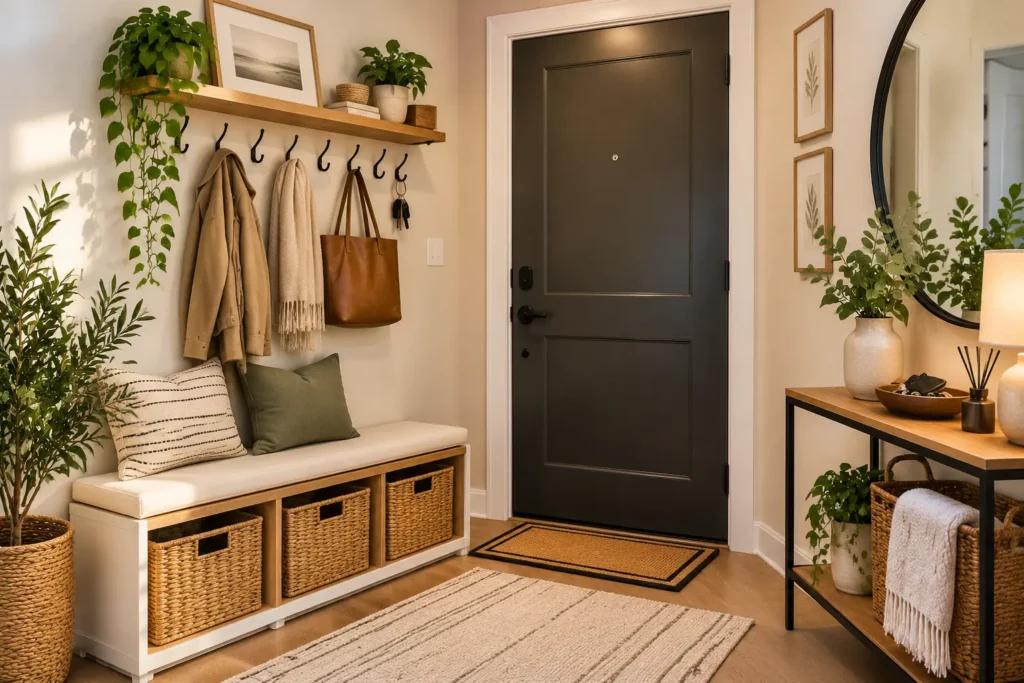
Many small apartments are missing one simple feature that makes everyday life easier: an entryway closet.
Instead, the area near your door often becomes the place where shoes collect, bags get dropped, jackets pile up, and everyday items have no clear home.
The good news?
You don’t need a separate foyer to create a useful landing zone. Start by identifying the smallest area near the door where shoes, bags, and keys can live without blocking the route into your home.
A few well-chosen storage pieces can create a welcoming drop zone for shoes, bags, and keys without crowding the entrance or blocking the way into your home.
The goal is not to create a picture-perfect entrance that nobody actually uses. The goal is to create a practical space that works for your everyday routine.
1. Create an Entryway Zone Even If You Don’t Have One
Your entryway does not need to be a separate room.
In many apartments, the entry area is simply the space closest to the front door.
Look for a small area that can become your landing zone:
- A wall beside your front door
- A narrow hallway
- A corner of your living room
- The space behind your door
- A small area near your kitchen entrance
The important part is giving everyday items a dedicated home.
Instead of:
- Shoes scattered around the floor
- Keys disappearing between rooms
- Bags sitting on chairs
Create one place where these items return every day.
Small space tip:
Even a 2–3 foot section of wall can become a functional entryway.
2. Use Vertical Space Instead of Taking Up Floor Space
When floor space is limited, your walls become valuable storage areas.
Instead of adding bulky furniture, look for ways to use vertical space.
Ideas include:
- Wall hooks for coats and bags
- Narrow floating shelves
- Hanging organizers
- Tall slim storage units
- Over-door storage solutions
The advantage?
You keep more floor space open, which helps the room feel larger.
For renters, always check product instructions and your lease before installing anything permanent.
Removable solutions may work for some lightweight items, but every wall surface is different.
3. Add a Small Shoe Storage Solution
Shoes are often the first thing that makes an entrance feel cluttered.
A simple shoe system can make a big difference.
Slim Shoe Cabinet
A narrow shoe cabinet works well because it uses vertical space.
Choose one that:
- Fits your available width
- Does not block your walking path
- Holds your everyday footwear
Storage Bench
A storage bench provides two functions:
A place to sit while putting on shoes.
Hidden storage underneath for shoes, bags, or seasonal items.
Shoe Basket System
If furniture is not an option, a simple basket can work.
Keep only frequently used shoes near the entrance and store seasonal footwear somewhere else.
4. Create a Drop Zone for Keys, Mail, and Everyday Items
Small objects create a surprising amount of visual clutter.
A simple drop zone prevents these items from spreading throughout your home.
Create a place for:
- Keys
- Wallet
- Sunglasses
- Earbuds
- Daily essentials
Easy solutions:
- Small tray
- Wall pocket
- Small shelf
- Decorative basket
When choosing a setup, prioritize daily access and a clear walking path over decorative storage. A simple tray or shelf is often more practical than furniture that narrows the entrance.
5. Use a Bench to Create an Instant Entryway
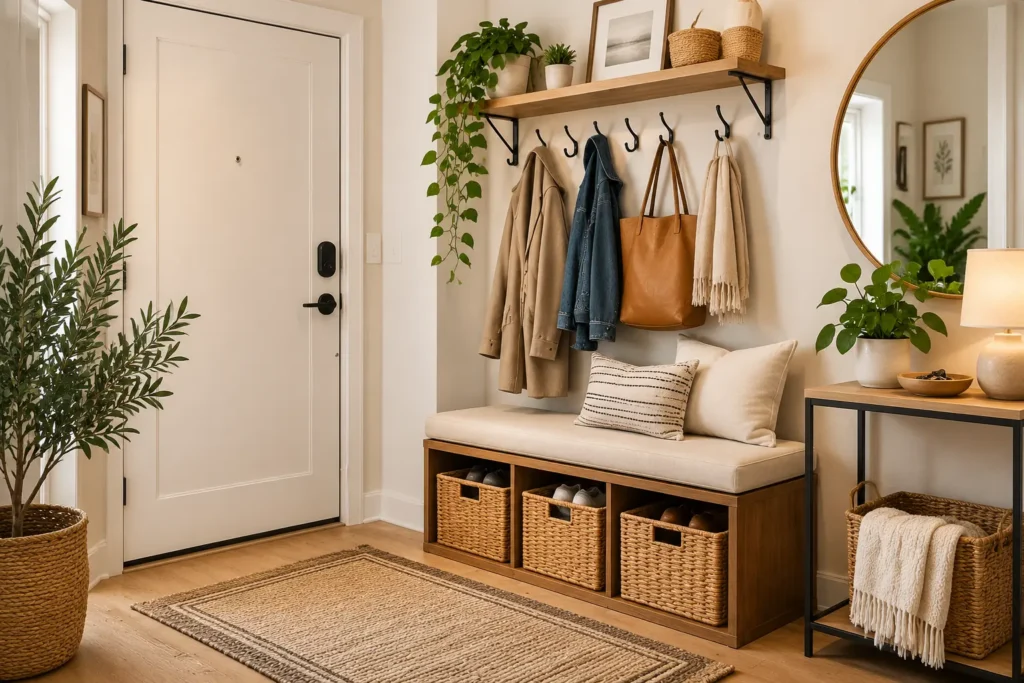
A small bench can transform an empty wall into a practical entry area.
A bench provides:
Seating
A comfortable place to put on and remove shoes.
Storage
Use baskets underneath for:
- Shoes
- Bags
- Seasonal accessories
Style
Add:
- A cushion
- A small plant
- A woven basket
This creates a welcoming first impression without making permanent changes.
6. Create a Rental-Friendly Entryway Without Drilling
One of the biggest challenges for renters is adding storage without damaging walls.
Instead of permanent changes, consider flexible solutions:
Furniture-Based Storage
Examples:
- Narrow console table
- Storage bench
- Freestanding coat rack
- Baskets
These can move with you when you change apartments.
Removable Options
For lightweight items, renter-friendly removable solutions may help.
Always follow manufacturer instructions and check whether the surface is suitable.
Leaning Storage
A leaning shelf or ladder-style organizer can add vertical storage without wall installation.
7. Store Coats and Bags Without a Closet
No closet does not mean coats and bags need to live on chairs.
Create a dedicated storage area.
Options:
Wall Hooks
Useful for:
- Jackets
- Handbags
- Everyday items
Slim Coat Rack
A narrow standing rack can work if you have floor space.
Choose a simple design so it does not make the entrance feel crowded.
Behind-the-Door Storage
The back of a door can be useful for:
- Lightweight bags
- Accessories
- Small items
Always check door clearance before adding storage.

8. Small Apartment Entryway Ideas Based on Your Layout
Every apartment has different challenges. Choose solutions based on your available space.
Studio Apartment
Keep it simple:
- One small wall area
- Vertical storage
- One basket for daily items
Avoid adding too many furniture pieces.
Narrow Hallway
Use:
- Slim shoe storage
- Wall hooks
- Mirror to reflect light
Keep walking paths open.
Open Living Room Apartment
Create separation with:
- Small console table
- Rug
- Storage basket
- Decorative divider
The aim is to make the entrance feel intentional without narrowing the route through the room. Choose the setup that fits your actual wall space, door movement, and daily belongings.
Choose an Entryway Layout by Door Shape
Worked planning example: a 36-inch stretch of wall does not provide 36 inches for furniture if the door handle and trim extend into it. Record wall width, handle projection, door-swing radius and the width of the actual walking route. Draw both the furniture and the open door on a top-down diagram. If the pieces overlap, choose a shallower alternative. If a shoe cabinet is being considered, draw its full depth on the floor with masking tape before ordering. Before ordering, check the piece with the Furniture & Doorway Calculator to confirm it fits through your doorway and into the entryway.
Rule of thumb: the right setup is the smallest one that holds today’s items while preserving access, not the one that fills every empty inch.
Can I create an entryway when the door opens straight into the kitchen?
Yes. Use a tray or small container on an existing surface outside food-preparation space and a designated shoe position that does not obstruct the entrance. Avoid installing shelves where they interfere with the door.
9. Make Your Entryway Feel Cozy
Organization does not have to look boring.
Small touches can make your entrance feel welcoming:
- Warm lighting
- Small plant
- Neutral basket
- Mirror
- Simple artwork
A cozy home is not about owning more things.
It is about making the things you already own feel intentional.
Measure Your Entryway Before Buying Storage
Before purchasing a shoe cabinet, bench, or console table, record these measurements:
- Available wall width beside the entrance.
- Maximum furniture depth that does not interfere with the door.
- Full door-opening clearance.
- Clear walking space after placing the furniture.
- Height and width of the items you plan to store.
Compare these measurements with the complete product dimensions, including handles, feet, and protruding parts.
A storage item that fits against the wall but blocks the door or walking route is not the right solution. Choose a smaller or freestanding alternative if necessary.

The best setup gives everyday belongings a clear home while keeping the doorway and main walking route open. Start with one practical storage solution, see how it works in your daily routine, and add more only if necessary.
Related Guides
Continue organizing your small apartment: