

You don’t need a spare room, a built-in window seat, or an expensive reading chair to create a cozy reading nook. A comfortable place to sit, suitable lighting, and a little room for your book can be enough to get started.
In a small apartment, the best reading spot might be the corner beside a window, the end of your sofa, or an awkward space that currently serves no purpose. You may not need to buy anything new to make it work.
These 13 reading nook ideas for small apartments focus on practical layouts, renter-friendly changes, and ways to use the space you already have. You’ll also find measurement tips to help you choose a spot without blocking doors or making your room feel more crowded.
Quick Answer: What Do You Need for a Reading Nook in a Small Apartment?
A functional reading nook usually needs four things:
- A comfortable seat: An armchair, floor cushion, padded bench, or the end of your existing sofa.
- Suitable lighting: Natural daylight or a task lamp positioned to illuminate your book without glare.
- A small surface: A side table, stable shelf, or lap desk for your book and other essentials.
- A cozy finishing touch: A cushion, throw blanket, or small rug that makes the spot inviting.
You don’t necessarily need all four as separate pieces of furniture. A sofa can provide the seat, a nearby table can hold your book, and a floor lamp can provide light.
Start with what you own. Try the arrangement before buying furniture or accessories, and make sure the finished setup leaves enough room to move around comfortably.
The Reading Nook Formula: Start With Comfort, Not Decoration
Before choosing a design, think about how you’ll actually use the space.
A beautiful corner won’t be useful if the seat is uncomfortable, the light is poor, or you have to move furniture every time you want to sit down.
Keep these practical considerations in mind:
- Lighting: Position a task light so that it illuminates the page without shining directly into your eyes or creating distracting reflections.
- Seating: Choose a seat that supports your back and feels comfortable for the amount of time you normally spend reading.
- Convenience: Keep your current book and other essentials within easy reach. If you enjoy reading with a drink, use a stable surface and keep liquids away from books, electrical equipment, and lamp cords.
- Clearance: Make sure the nook doesn’t interfere with doors, windows, walkways, or furniture you use every day.
With those basics covered, you can create a reading spot in almost any suitable corner of your apartment.
Window Corner Reading Nooks (Ideas 1–3)
Windows can provide useful daylight and a pleasant view. However, you don’t need a large bay window or a built-in bench to take advantage of the available space.
1. The Single-Chair Window Corner
If you already own a comfortable chair, try placing it near a window where it won’t obstruct the curtains or access to the window.
Angle the chair so daylight reaches the page from the side. Add a floor lamp for evenings and a small side table if space allows.
Before settling on the position, measure the chair’s full footprint, including any recline or movement. A chair that fits when upright may need additional room when you lean back.
Best for: Living rooms and bedrooms with an unused window corner.
Budget tip: Test the arrangement with an existing chair before purchasing a dedicated reading chair.
2. The Floor-Cushion Window Nook
A floor-cushion nook can work when a conventional chair would make the room feel crowded.
Place one or two supportive floor cushions beside a window, leaving enough space for the window to open and for people to walk past. Add a small basket for books if it fits without obstructing the area.
Choose cushions that are comfortable for sitting and getting up from the floor. If you have difficulty sitting low, a supportive chair or bench may be more suitable.
When the space is needed for another activity, stack the cushions neatly or move them to storage.
Best for: Studio apartments, flexible living rooms, and people who prefer floor seating.
3. The Curtain-Frame Reading Corner
You can make an existing chair feel more intentional by arranging it beside your curtains.
Position the chair near the window, then use a throw blanket and a cushion to give the corner a consistent look. Keep the curtains free to open and close, and make sure fabric stays away from hot lamps and other heat sources.
The result is a cozy visual frame without installing a divider or making permanent changes.
Best for: Renters who want a defined reading corner without adding furniture.
Alcove and Awkward-Space Reading Nooks (Ideas 4–6)
Some of the most useful reading nook locations are spaces that don’t comfortably fit larger furniture.
Before choosing one, check whether it is genuinely unused space or an area needed for storage, access, ventilation, or everyday movement.
4. The Bookshelf-Side Nook
If you already have a bookshelf, look at the space beside it.
A compact chair or floor cushion may fit there, with your books within easy reach. A small lamp can provide task lighting if a suitable outlet is available.
Keep enough space to remove books and open any nearby drawers or doors.
If the bookshelf is tall, make sure it is stable and installed according to the manufacturer’s instructions. Don’t pull a tall, unsecured bookcase away from a wall simply to create a reading corner.
Best for: Book lovers who want their reading spot close to their collection.
5. The Hallway-End Retreat
A wide hallway end or an unused recess may offer enough space for a small chair and a lamp.
Measure the available width and depth before moving furniture into the area. Keep the entire route to doors and exits unobstructed, and follow any applicable building and fire-safety requirements.
If the hallway is narrow, a reading nook may not be appropriate. In that case, consider a bedroom corner or the end of an existing sofa instead.
Best for: Apartments with a genuinely unused recess or wide hallway end.
6. The Under-Stairs or Sloped-Ceiling Nook
If your apartment has a suitable under-stairs area or a room with a sloped ceiling, consider using the lowest section for floor seating or a compact chair.
Place the seat where you can sit upright comfortably without hitting your head. Add a cushion and a suitable reading light.
Use a plug-in or battery-operated light according to its instructions, keeping cords out of walking routes. Don’t use an area that blocks access to utilities, electrical equipment, ventilation, or an exit.
Best for: Unusual layouts with a safe, accessible area that standard furniture doesn’t use well.
Bedroom Reading Nooks (Ideas 7–8)
A bedroom can offer a quieter place to read, especially when your living room is shared or busy.
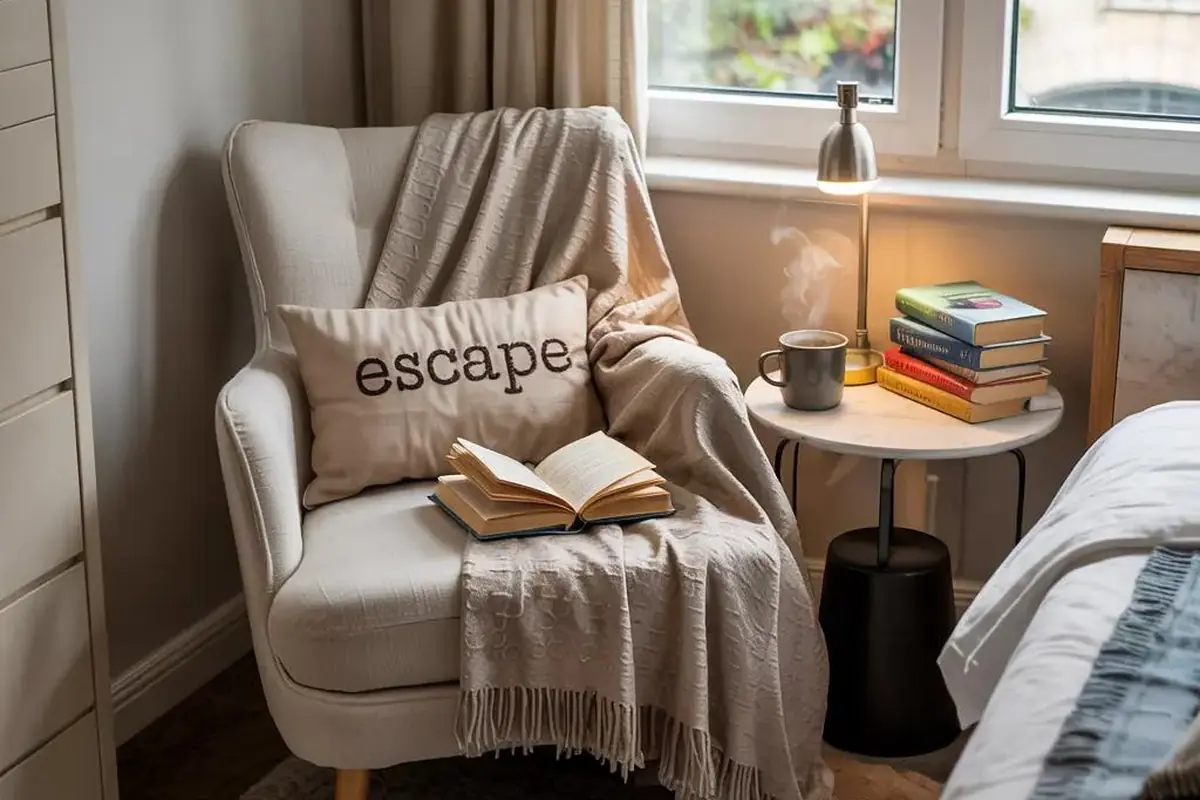
7. The Bedroom Corner Chair
Look at the corner opposite the bed or a suitable section of wall beside the bedroom door.
If there’s enough clearance, a compact chair and a small lamp can create a dedicated reading spot without requiring a separate room.
Measure the chair before buying it. Check the distance between the chair, bed, drawers, and door so the arrangement doesn’t interfere with normal movement.
A narrow chair isn’t automatically comfortable, so try the seat dimensions and back support before choosing one.
Best for: People who prefer to read privately before bed or during quiet breaks.
8. The Bed-Edge Reading Nook
If you don’t have spare floor space, your existing bed can become a temporary reading spot.
Use supportive pillows against a stable headboard or wall, and position a suitable reading light nearby. A lap desk can provide a surface for a book, provided it sits securely and doesn’t make your posture uncomfortable.
Keep drinks away from electrical devices and bedding, and avoid using an unstable clip-on light where it could fall.
This isn’t a separate furniture arrangement, but it can be a practical option for short reading sessions when every inch of floor space matters.
Best for: Very small bedrooms and studio apartments without room for another seat.
Unusual Reading Nook Ideas (Ideas 9–11)
You don’t always need to create a new seating area. Sometimes a small change in how you use an existing space is enough.
9. The Reading Closet
A little-used closet might appear to be a good place for a compact reading nook, but it needs careful consideration.
Only consider this arrangement if the closet is large enough to sit comfortably, remains safely accessible, and isn’t required for utilities, ventilation, electrical equipment, or other essential functions.
Keep the doorway unobstructed and make sure you can leave the space easily. Use appropriate lighting, keep cords from becoming trip hazards, and never use candles or other open flames in a confined storage space.
Don’t remove closet doors or make alterations unless your rental agreement permits them.
In many apartments, using the closet for storage and placing a floor cushion or chair nearby is the more practical option.
For ideas about organizing coats and bags near your front door, see our guide to small apartment entryway ideas when you don’t have a closet.
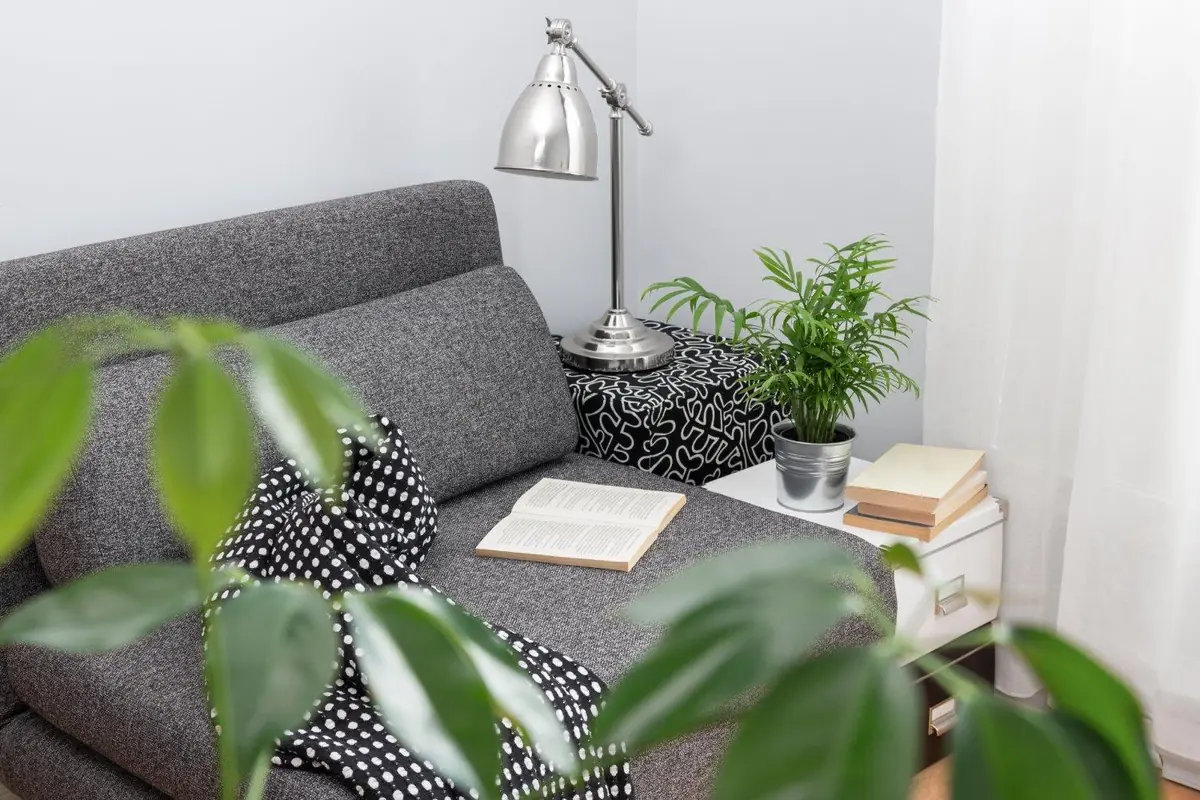
10. The Sofa-End Reading Nook
You may already have the perfect reading seat: the end of your existing sofa.
Choose one cushion as your usual reading spot. Position a suitable lamp nearby and use an existing side table or a stable table that fits comfortably beside the sofa.
A dedicated throw blanket can make the spot feel different from the rest of the living room without requiring another chair.
Keep the lamp and its cord safely positioned, especially if the sofa is close to a walkway.
Best for: Small living rooms where another chair would make the layout feel cramped.
For more ways to work with furniture you already own, see our cozy minimalist living room guide.
11. The Room-Divider Reading Nook
In a studio apartment, a reading spot can feel more private when it is visually separated from the bed or work area.
If your existing layout permits, position a low, stable bookcase or another suitable freestanding divider to define the space.
A divider must remain stable and must not block an exit, doorway, or required route through the room. Follow the manufacturer’s instructions, including anchoring requirements where applicable. A short bookcase is not automatically tip-proof.
If you cannot position a divider safely, use a rug, lamp, or different seating orientation to visually distinguish the nook instead.
Best for: Open-plan studios that need distinct areas without permanent walls.
Small Living-Space Reading Nooks (Ideas 12–13)
Some apartments have no obvious corner for a chair. In these cases, flexibility matters more than creating a permanent nook.
12. The Balcony-Door Reading Spot
The area near a balcony door may receive good daylight, but the door itself must remain accessible.
If there’s a safe area beside the door, place a portable floor cushion or compact seat there during reading time. Move it away when you need to use the door.
Never obstruct a balcony exit, emergency route, or door swing. If the available space is directly in front of the doorway, choose another location.
Best for: Apartments with a bright corner beside, rather than in front of, a balcony door.
13. The Kitchen-Table Reading Nook
A dining table can serve as a reading spot without adding a single piece of furniture.
Choose a comfortable chair, keep your book and reading light within reach, and use the table when it isn’t needed for meals or other activities.
When you’re finished, return the area to its usual purpose. This arrangement works especially well for morning reading, studying, or journaling.
Best for: Studio apartments and homes where one table serves several functions.
Realistic Reading Nook Measurements: Will It Fit?
There is no single minimum footprint that works for every reading nook. The space required depends on the furniture, how it is used, and the clearance needed around it.
Use these figures as initial planning estimates, not guaranteed minimums.
| Nook type | Initial planning estimate | What to check |
|---|---|---|
| Compact chair | Around 3 × 3 feet, potentially more | Chair depth, recline, lamp base, and access |
| Floor cushion | Around 2.5 × 2.5 feet | Cushion size, getting up, and walkway clearance |
| Small bench | Around 4 × 2 feet | Bench dimensions, seat height, and surrounding access |
| Bed-edge setup | No additional floor area may be needed | Comfortable posture, stable lighting, and safe surfaces |
| Closet nook | Depends on the actual closet | Usable interior space, exit access, ventilation, and lighting |
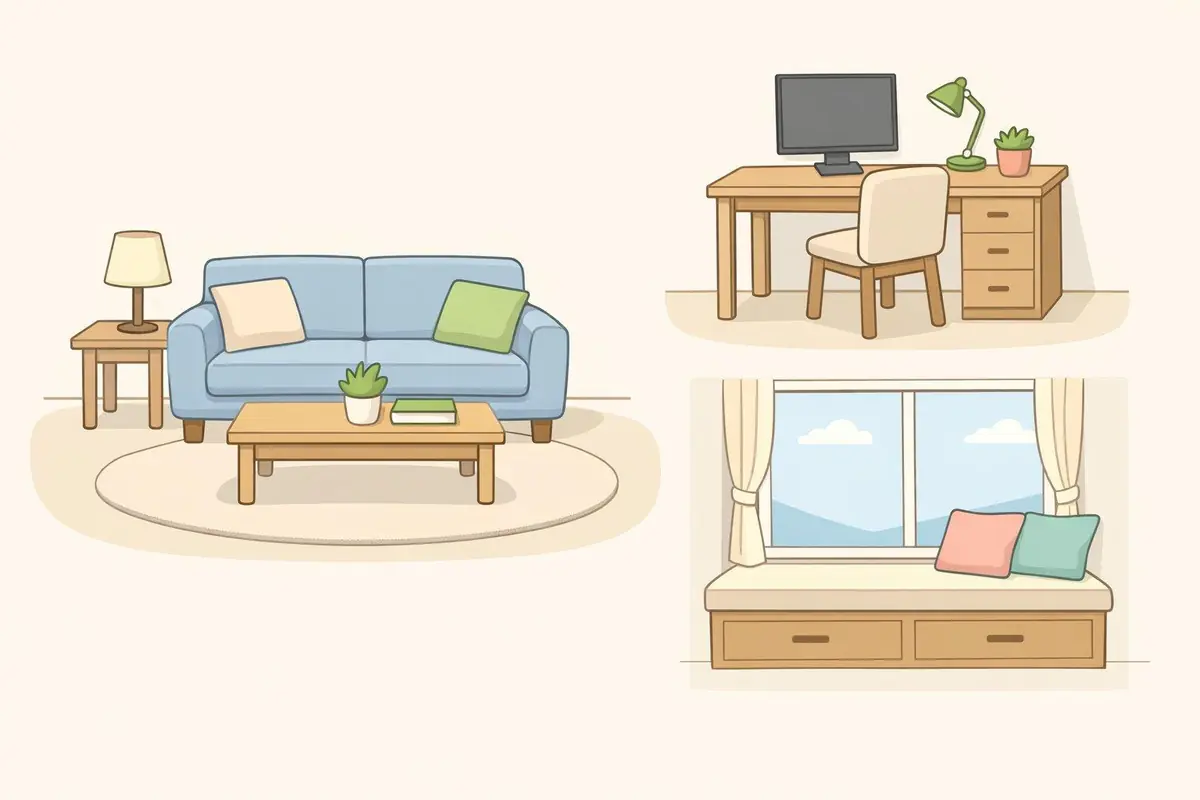
Before committing to any layout, measure the furniture itself rather than relying only on these estimates.
Use removable paper markers or painter’s tape, where suitable for your flooring, to outline the proposed furniture footprint. Walk around the area and open nearby doors before moving the furniture into place.
A reading nook should make your home more comfortable, not create a new obstacle.
Illustrative example: a corner measuring 30 × 36 inches is not automatically enough for a chair with a 29 × 29-inch footprint — chair legs, arm movement and the space needed to sit down and stand up can make it impractical. Check the chair’s actual dimensions and keep the path clear. If you buy a chair later, check it can be delivered into the apartment with the Furniture & Doorway Calculator.
Does my reading nook need a dedicated bookshelf?
No. One small basket or an existing shelf may be enough for the book currently being read, which often works better in a small home than adding a separate bookcase.
How to Create a Reading Nook in a Rental Without Permanent Changes
You can make a reading corner feel personal without drilling holes or installing built-in furniture.
Try these renter-friendly approaches:
- Use existing furniture: A chair, stool, sofa, or cushion may already meet your needs.
- Choose portable lighting: A plug-in lamp or battery-operated light can work when used according to its instructions.
- Use removable accessories carefully: Check surface compatibility and manufacturer guidance before applying adhesive hooks or strips.
- Avoid unnecessary installation: Don’t mount shelves or lights without checking your lease and obtaining permission where required.
- Keep the arrangement movable: Choose a setup that can be rearranged without damaging walls or flooring.
- Protect walkways: Don’t sacrifice access to doors, windows, or essential household equipment for the sake of a decorative corner.
Renter-friendly doesn’t automatically mean damage-free. Every product has its own installation requirements, so check the instructions before using it.
Build Your Reading Nook on a Budget
The easiest way to overspend is to buy furniture before discovering whether you will use the space.
Instead, test the arrangement with what you already have.
Step 1: Choose a spot. Try an unused corner, the end of a sofa, or an existing bedroom chair.
Step 2: Read there several times. Notice whether the seat, light, and surrounding space feel comfortable.
Step 3: Identify the actual problem. Perhaps the light is insufficient, the seat lacks support, or there is nowhere to put your book.
Step 4: Buy only what solves that problem. One practical lamp may be more useful than several decorative accessories.
Step 5: Review the arrangement after a week. If you consistently use the spot, decide whether it needs any further improvement.
You can also look for secondhand furniture, borrow a suitable chair, or use a cushion and existing lamp.
There is no need to buy matching decor or a dedicated reading chair simply because a photo shows one.
Common Reading Nook Mistakes to Avoid
Choosing a spot for appearance alone: A beautiful corner isn’t useful if it is uncomfortable or inconvenient.
Ignoring the light: Test your reading spot at the time you normally use it. Daylight can change throughout the day and across seasons.
Forgetting about movement: Furniture that blocks a doorway, window, or walkway can make a small apartment feel even smaller.
Buying furniture before measuring: A chair that fits in a photograph may be too deep for your actual room.
Overdecorating the nook: Too many cushions, baskets, and accessories can make the spot harder to use.
Using unstable furniture as a divider: Bookcases and freestanding shelves must be suitable for their intended use and installed according to their instructions.
Leaving the area cluttered: Return books, cups, and other items to their proper places when you’re finished.
A simple arrangement that you use regularly is more valuable than a perfectly styled corner that remains untouched.
Frequently Asked Questions
What is the smallest workable reading nook size?
There is no universal minimum. A floor cushion may need only a small patch of clear floor, while an armchair needs room for the chair itself and enough space to get in and out comfortably. Measure the actual setup and keep necessary walkways clear.
How do I make a reading nook without a window?
Choose a comfortable seat and use a suitable task lamp positioned to illuminate the page without glare. A small side table, a few books, and a comfortable cushion can make the space inviting even without natural light.
What kind of light is best for reading?
A directional task light that illuminates the page without creating glare or harsh shadows is a useful starting point. Warm-white bulbs around 2700K–3000K may suit relaxing evening reading, but choose brightness and color temperature according to your comfort and the room.
How do I keep a reading nook from becoming a cluttered corner?
Keep only a few reading-related items in the space, such as your current book, a throw, and a lamp. Return cups, chargers, and unrelated items to their usual homes after each session.
Our weekly cleaning schedule for small apartments can help you build a simple reset into your routine.
Can I create a reading nook in a studio apartment?
Yes. An existing sofa, a suitable bedroom corner, or a compact floor-cushion setup may work without adding another piece of furniture. If you use a room divider, make sure it is stable and doesn’t block doors or essential routes.
Do I need to buy a special reading chair?
No. Start with a chair or sofa you already own. If you discover that it lacks support or isn’t comfortable for your reading sessions, you can then look for a suitable replacement.
The Bottom Line
The best reading nook ideas for small apartments make use of space without making everyday life more difficult.
Start with a suitable location, test the arrangement with existing furniture, and choose lighting and seating that support comfortable reading. Measure before buying anything, keep doors and walkways clear, and avoid unnecessary permanent changes in a rental.
Whether you use a window corner, the end of a sofa, a bedroom chair, or a kitchen table, the goal is the same: a comfortable spot that fits naturally into your home.
Start small, make the space useful, and add only what you genuinely need.