
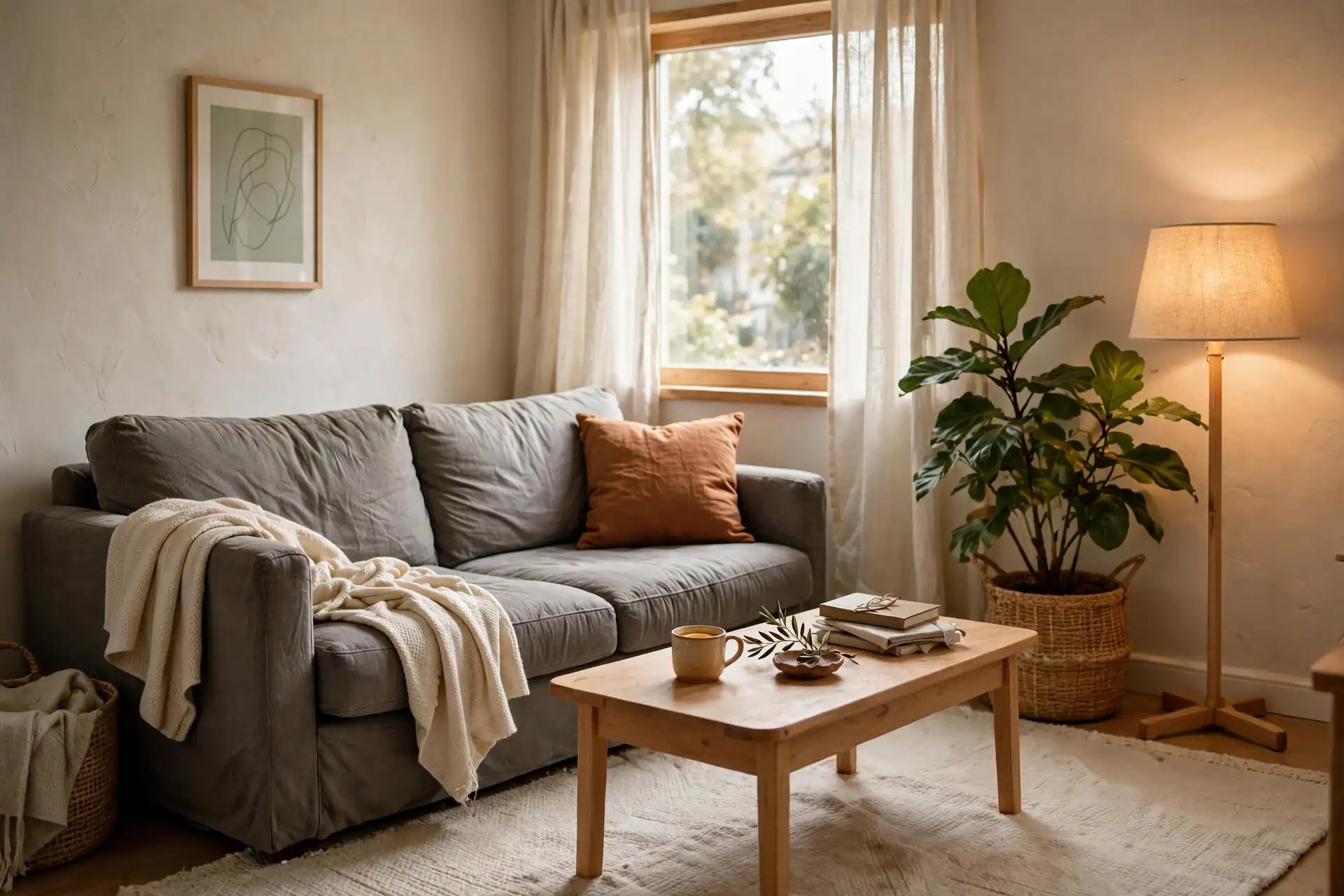
Your sofa is fine. It might be grey, dark brown, or covered in a pattern you wouldn’t choose today, but it’s comfortable and it fits. Replacing it just to get a calmer-looking living room is a big expense.
Often, the problem is somewhere around it: a ceiling light that feels too bright at night, a coffee table buried under everyday things, or a chair you have to squeeze past. Those are the details that decide whether a small space feels like a cozy minimalist living room or just a crowded one.
Those are better places to start.
A cozy minimalist living room should have enough space to move around, somewhere comfortable to sit, and room for the things you actually use. You can work toward that with your existing furniture. Try the free changes first, then decide whether anything is missing.
Start with the sofa you already own
Because your sofa takes up a large part of the room, it helps to choose colors and textures that work with it.
If your sofa is grey
Try a cream throw, an oatmeal cushion cover, or a muted terracotta accent. These can soften the look of a cool grey sofa without changing the whole room.
Check what you already have before shopping. A blanket from the bedroom may be enough to test whether you like warmer colors in the space.
Grey varies, too. Some fabrics have blue undertones; others lean brown or green. Look at your choices beside the sofa in daylight and with your evening lights on.
If your sofa is dark brown
Give it a little contrast. Cream or oatmeal textiles can break up a large dark surface, while existing wood furniture can help the brown feel connected to the rest of the room.
You don’t need to make every accessory brown. Start with one lighter cushion or throw and see how much difference it makes.
If the whole corner feels dark, check the lighting before buying more textiles. A lamp you already own may do more for that spot than another cushion.
If your sofa is patterned
Choose one color from the fabric and repeat it in a plain cushion, blanket, or nearby accessory. Keep the surrounding surfaces fairly simple so the sofa has some breathing room.
You can also try a solid throw over one section. There’s no need to cover the entire sofa, especially if the blanket slips every time someone sits down.
A useful starting point: choose a small group of colors already present in your furniture and repeat them gently around the room. Matching everything isn’t necessary.
Four changes to try before spending money
1. Fix the route through the room
Walk from the doorway to your usual seat. Notice what gets in the way.
A side table might need moving. An occasional chair may work better in another corner. A basket could sit beside the sofa instead of in the path to it. Small moves like these do a lot of the quiet work in a cozy minimalist living room.
Don’t pull furniture away from the walls just because a decorating guide says to. In some rooms, a small gap looks good; in others, it uses space you need.
Keep the arrangement that makes the room easier to use.
2. Reset one busy surface
Start with the coffee table or the surface you see first from the doorway. Clear it, wipe it, and put back what belongs there.
That might be a lamp and a book. It might be the remote, coasters, and a bowl for your glasses. There’s no required number of objects.
Move undecided decorations into a temporary box. Revisit them later before donating anything, particularly shared belongings or sentimental pieces.
3. Borrow from another room
Try a bedroom throw on the sofa. Move a small lamp from the hallway. Swap two cushion covers.
These small experiments let you test a different look without committing money to it. If moving something leaves another room less comfortable or useful, put it back.
Plants need a little more thought: move one only if the new spot suits its light requirements.
4. Give everyday clutter a convenient home
A tray can keep remotes and coasters together. A basket beside your seat can hold a blanket. An existing drawer might be a better home for spare chargers.
Put storage close to where you use the items. If putting something away means crossing the room and opening three containers, it probably won’t happen very often.
Make the lighting more comfortable
Before buying decor, look at the room after sunset. Does it feel pleasant to sit in, or does one overhead light dominate everything?
If you already own a table or floor lamp, try using it near your seating area. Keep enough light for reading, moving around, and anything else you do there. Layered light is one of the easiest ways to make a cozy minimalist living room feel warm after dark.
Warm-white bulbs around 2700K are worth trying if you prefer a softer evening atmosphere. Check that the bulb suits the fixture, stays within its rating, and works with any dimmer.
Brightness matters as much as color. A warm bulb can still feel glaring if it’s exposed at eye level. A suitable shade and a different lamp position may help.
With limited outlets, start by rearranging existing lamps within reach. Avoid creating trailing cords across walkways just to achieve a particular look.
Two cozy minimalist living room layouts for small spaces
These are arrangement ideas, rather than measured floor plans. Before moving heavy pieces, note the room dimensions, furniture depth, door swings, outlets, and any heaters or vents that need clearance.
A narrow living room: protect one clear route
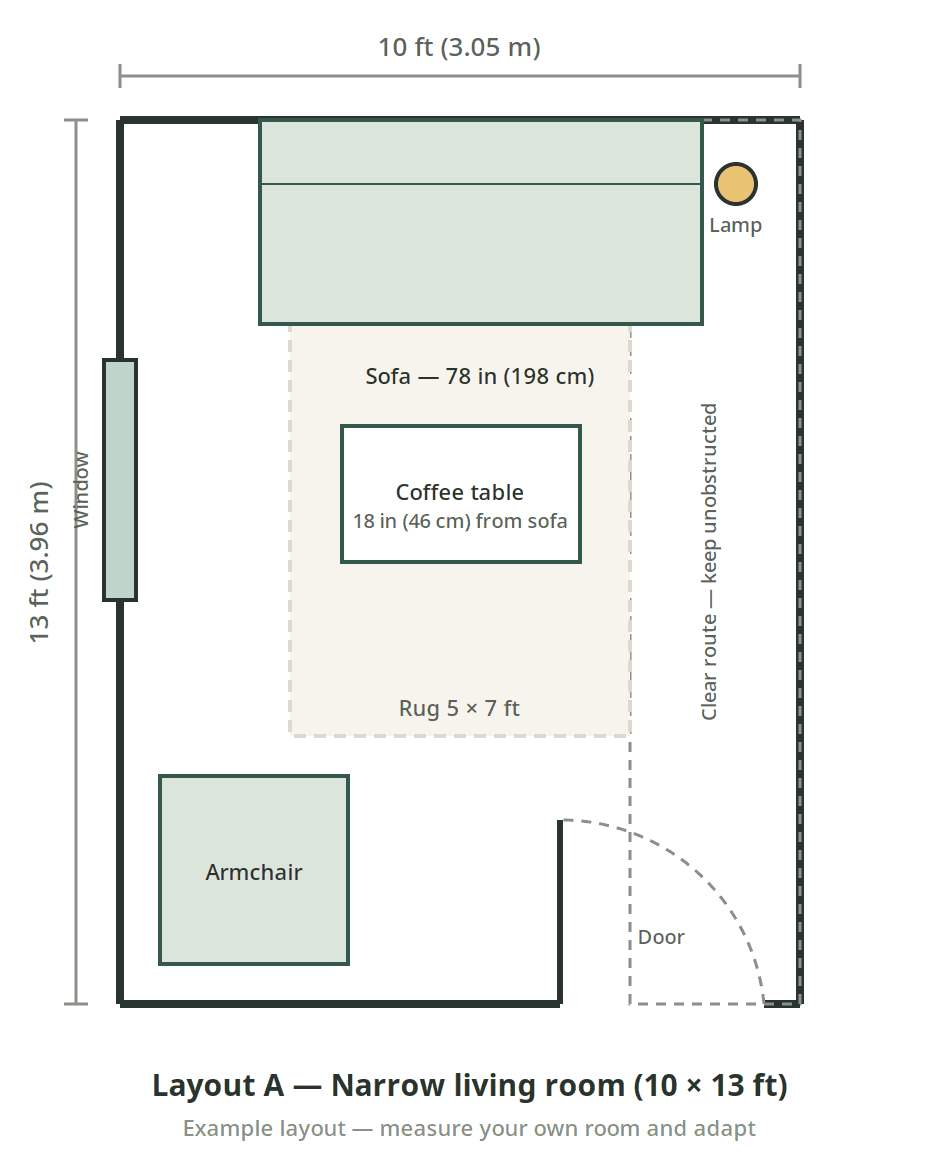
Try the sofa along a long wall and keep a continuous route through the room. Add an armchair only if it fits without interrupting that route.
Between a sofa and coffee table, roughly 14–18 inches can be a useful starting point for reaching drinks and allowing legroom. That gap is separate from the main walkway.
Where possible, aim for around 36 inches along the main route, allowing more room for your household’s mobility needs. These are planning guidelines, not a guarantee that a particular arrangement will work.
If the coffee table makes the room awkward, try an existing side table beside the sofa instead. You don’t have to include every piece of conventional living-room furniture. In a cozy minimalist living room, leaving something out is often the better choice.
A living room that doubles as an office: separate by position
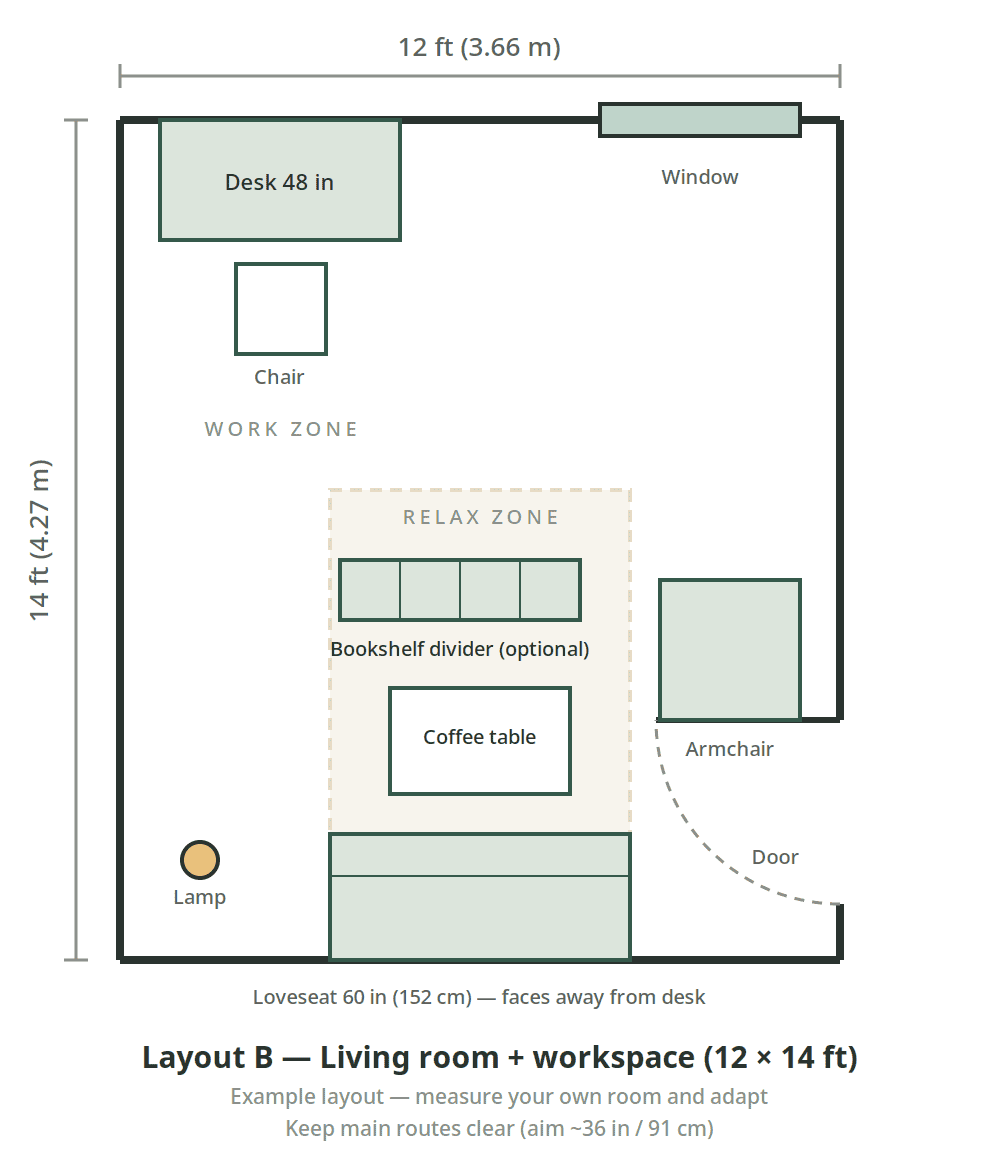
Place the desk where you have usable light and convenient power. Leave enough space to pull out the chair and sit down comfortably.
If the room allows it, angle the seating so the desk isn’t your main view when relaxing. An existing rug can help define the seating area, but furniture placement alone may be enough.
You don’t need a bookshelf divider. It can take up valuable space, and shelving used as a divider may still require anchoring. Follow the product’s installation instructions and your rental agreement.
At the end of the day, putting away loose papers and closing the laptop may make the biggest difference.
Test Two Layouts Before Replacing a Single Piece
Design demonstration, not a finished-home photograph: imagine a narrow living room with one sofa, one chair, a small table and a floor lamp. You can rearrange these same four items for two different goals.
Layout A — conversation first
Position the chair where people can face the sofa without blocking the passage from the door. Keep the lamp near the seating zone where the cord can reach a suitable outlet safely.
Layout B — open walking route
Move the chair toward an unused corner and clear one uninterrupted route through the room. A small table can become a shared surface between seats rather than a visual barrier in the middle.
Draw both layouts to scale with the dimensions of your actual furniture. Include door swing, windows, radiators or heating units, outlet positions and the space needed to sit down or walk past. Never cover electrical cords with rugs or use furniture to block vents.
Quick visual test: keep the arrangement for a few days before buying accessories. Is the route easier? Can you read without glare? Are daily essentials easy to put away? If you do decide to buy a replacement piece, check it will fit through the door first with the Will It Fit? Furniture & Doorway Calculator.
If an arrangement leaves a chair unused, it may work better as a reading nook chair. If everyday clutter still has nowhere to go, our hidden storage ideas compare ottomans, under-bed boxes and door storage by access and fit.
Quick fixes when your cozy minimalist living room still feels busy
| What you notice | Try this first | Consider buying only if needed |
|---|---|---|
| Harsh evening light | Reposition an existing lamp and check for glare | A compatible warm-white bulb or suitable shade |
| Visible cables | Move equipment closer to outlets and route cords away from foot traffic | Suitable cable-management accessories |
| A crowded floor | Relocate one occasional item and clear the main route | Storage that fits an identified space |
| Furniture that feels disconnected | Repeat a color or texture using existing textiles | One cushion cover or throw |
| A cluttered coffee table | Remove items that belong elsewhere and group daily essentials | A small tray, if you don’t already own one |
For electrical cables, keep cords from being pinched under furniture or covered by rugs. Keep plugs accessible, avoid tightly coiling excess electrical cord, and follow equipment instructions for ventilation. Adhesive clips may affect some finishes, so check suitability before attaching them.
If you buy something, solve one problem at a time
Live with the rearranged room for a few days before making a shopping list. Notice what is still inconvenient.
Too dim to read? A suitable lamp may be useful.
The sofa feels visually heavy? Try one lighter textile.
Small belongings keep spreading out? Look for storage sized for those specific items.
The seating area feels disconnected? A rug might help, but measure first. A 5 × 7-foot rug suits some arrangements; others need a different size or no additional rug at all. Mark the proposed outline before buying and check nearby door movement.
You don’t need all four. Choose the change that addresses the problem you keep noticing.
Common questions
Can I get this look without a rug?
Yes. A rug isn’t required for a cozy minimalist living room. Keep the furniture arrangement clear, use comfortable lighting, and bring texture through cushions, a throw, or existing curtains.
If you already have fitted carpet, there’s no need to add another layer unless you like it and it works safely in the space.
What if my apartment doesn’t get much daylight?
Keep available window light as unobstructed as privacy allows. Try lighter textiles near the seating area and position lamps where you spend time.
A mirror may reflect a brighter view, but it won’t create light. Check what it reflects and follow its mounting or anchoring instructions.
Can this work with children or pets?
Yes, but plan around how your household lives. Leave room for play, choose washable textiles where useful, and keep frequently used toys easy to reach and put away.
The room doesn’t have to look empty. A clear walking route and manageable storage are more useful than a surface that needs constant restyling.
What if I can’t paint?
Work with the wall color you have. Textiles, lighting, and furniture placement give you plenty to adjust without painting.
Test colors beside the wall before buying. A cream that looks warm online may look yellow or grey in your room.
Start with one corner
You don’t need to finish the whole room this weekend. Clear the table beside your usual seat, move a lamp, and try a blanket you already own.
Then sit down and use the space. Can you reach your drink? Is the light comfortable? Can you walk through without moving something?
Those small improvements are a good foundation for a cozy minimalist living room that feels calm and yours.