
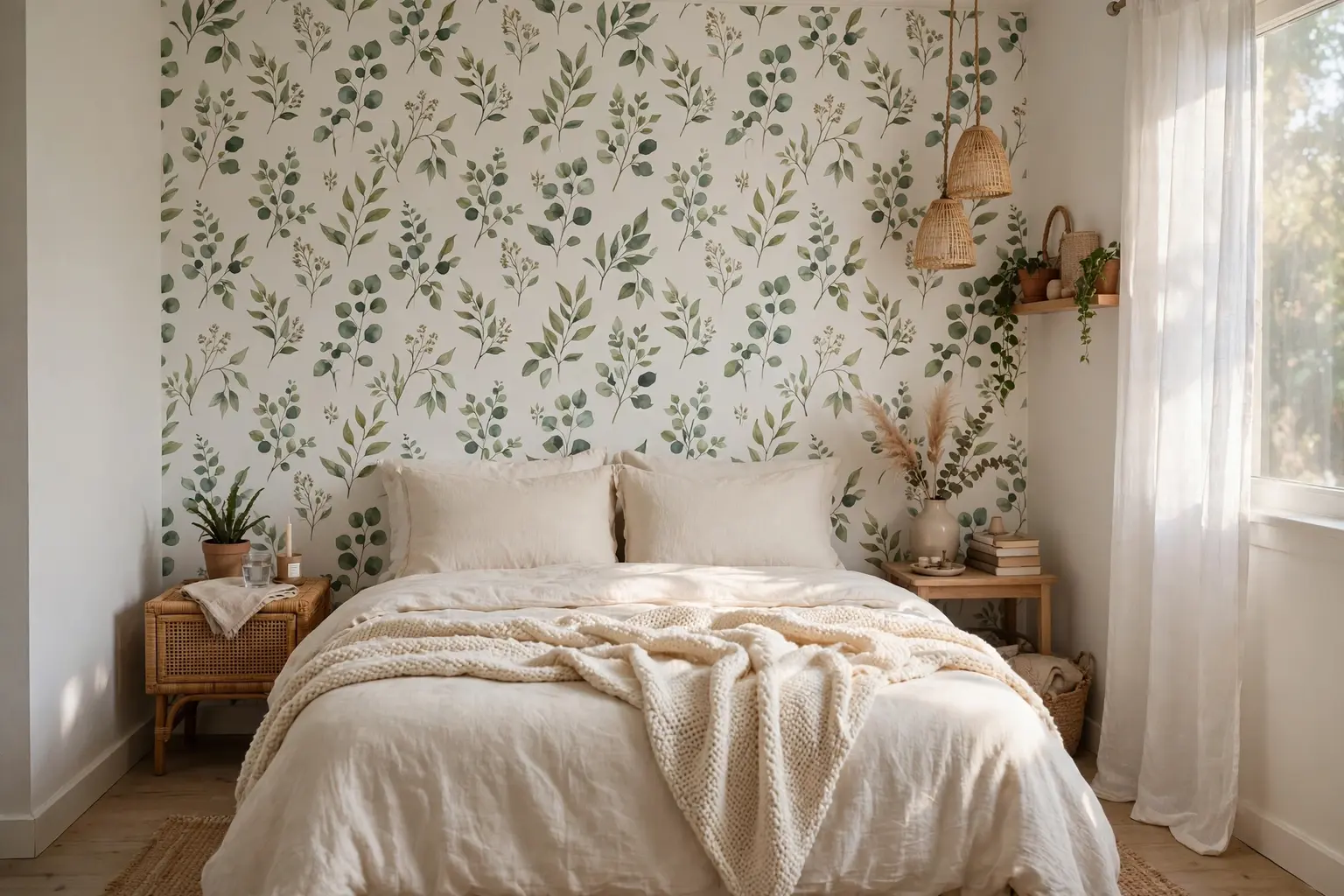
Wallpaper can transform a small apartment without requiring new furniture or a major renovation. For renters, however, appearance is only part of the decision. The wallpaper must also suit the wall surface, follow the manufacturer's instructions, and comply with the rental agreement.
Peel-and-stick wallpaper is a popular option because it does not require traditional wallpaper paste. However, removable does not automatically mean damage-free. Paint condition, wall texture, humidity, application time, and removal technique can all affect the result.
The ideas below include full accent walls, smaller decorative panels, furniture applications, and pattern choices that can help make a compact room feel more personal.
Before You Buy Anything: Check the Wall and the Lease
Before choosing a pattern, check whether the product is suitable for your wall and whether your rental agreement permits the installation.
Start with these three checks.
1. Check your rental agreement.
Some landlords allow temporary wallpaper, while others require permission before any wall covering is installed. Check the written agreement and obtain permission where required.
Keep a copy of any approval so you can refer to it when moving out.
2. Inspect the wall surface.
Most peel-and-stick wallpaper products are designed for clean, dry, smooth surfaces in good condition.
Textured walls, damaged paint, damp areas, and surfaces with peeling finishes may cause poor adhesion or difficult removal.
Do not cover mould, water damage, or dampness with wallpaper. Address the underlying problem first.
Paint finishes also matter. Some manufacturers recommend specific finishes, such as satin or semi-gloss, and may not recommend matte or heavily textured surfaces.
3. Follow the exact paint-curing instructions.
Newly painted walls need time to cure before wallpaper is applied. The required period depends on the paint and wallpaper product.
For example, York Wallcoverings specifies a minimum four-week curing period for its peel-and-stick wallpaper instructions. Other manufacturers may provide different guidance.
Do not apply one brand's waiting period to every wallpaper product.
Read York's official installation instructions.
Test Before Covering a Full Wall
Order a sample before purchasing enough wallpaper for the entire project.
Follow the manufacturer's sample-testing instructions and test it in an inconspicuous area of the intended surface.
Check whether the sample adheres properly and whether removal affects the paint or finish. A small test can reveal compatibility problems, although it cannot guarantee that a larger installation will remove without damage.
Measure Before Ordering
Measure the wall height and width, including doors, windows, outlets, and other interruptions.
Check the wallpaper's pattern repeat so you can estimate how much extra material is needed to align adjoining strips.
If purchasing multiple rolls, check that they have matching batch or lot information to reduce visible colour differences.
Keep the product name and installation instructions for future reference.
Never cover ventilation openings, smoke detectors, sprinkler heads, safety signage, or electrical fixtures.
If installation requires removing an outlet or switch cover, follow the manufacturer's electrical safety instructions. Turn off the relevant circuit before removing any cover, and use a qualified electrician if you are unsure how to do this safely.
Check Wall Compatibility Before Choosing a Pattern
Peel-and-stick is not automatically damage-free. The lease, paint type, texture, surface condition and specific wallpaper brand all matter. Tempaper recommends smooth, sound, primed and painted surfaces with suitable finishes, and warns against certain flat or textured surfaces. Chasing Paper also advises caution on texture and stresses allowing new paint to cure. Read the instructions for the exact product rather than applying one brand’s rules to another.
Illustrative measuring example: suppose an accent wall is 8 feet wide and 8 feet high. With wallpaper 20 inches wide, the wall requires ceil(96 ÷ 20) = 5 vertical strips before seams, trimming, pattern repeat and waste are considered. The number of rolls cannot be determined from area alone: roll length and usable strip length matter. Enter the wall and the actual roll specifications into the Peel-and-Stick Wallpaper Calculator, then verify the quantity against the manufacturer’s pattern-matching guidance.
Skip a full-wall application when: the lease prohibits it; the wall is damaged, textured or otherwise incompatible; paint is not properly cured; or the sample raises concerns. A framed panel may offer a less invasive design option, but any attachment method also requires surface and rental approval.
This is a research-based planning example, not a claim that we installed or removed wallpaper ourselves.
If the accent wall sits behind the sofa, our cozy minimalist living room guide shows how to keep the seating calm around it; for a dark entryway wall, see our entryway ideas without a closet.
One Wall, Done Well
In a small apartment, decorating one wall can create a focal point without making every surface compete for attention.
1. Make an Accent Wall Behind the Bed
The wall behind the bed is a natural place to introduce wallpaper.
The bed already acts as the room's main visual anchor, so a patterned wall can add colour and personality without requiring additional decorative furniture.
Choose a design that works with your bedding, headboard, and curtains.
If the headboard is already visually detailed, a subtle wallpaper pattern may create a more balanced look. If the furniture is simple, a more noticeable design can provide contrast.
You do not need to cover all four bedroom walls to create a coordinated appearance.
2. Give the Sofa Wall a Focal Point
A wallpapered wall behind the sofa can help define the seating area in an open-plan apartment.
Measure the wall in relation to the sofa so the pattern looks balanced rather than appearing as a narrow strip behind the furniture.
Keep enough room to access the wall during installation and avoid trapping wallpaper edges behind heavy furniture.
Choose a pattern that works with the sofa fabric, cushions, and other large elements in the room.
3. Brighten a Dark Entryway Wall
A narrow entryway can feel plain or enclosed, especially when it receives little natural light.
A light-coloured wallpaper with a subtle geometric or botanical pattern can add visual interest without requiring additional floor space.
Before applying wallpaper, inspect the wall for marks, dampness, and textured paint.
If the surface is unsuitable, consider framed wallpaper panels instead. They can provide a similar decorative effect without applying adhesive directly to the wall.
No Full Wall Required
If you cannot wallpaper an entire wall, smaller applications can introduce colour and pattern with less material.
4. Hang Framed Wallpaper Panels
Wallpaper can be displayed as wall art by cutting it to fit picture frames.
Choose two or three matching frames and use the same wallpaper pattern in each to create a coordinated arrangement.
This approach avoids applying wallpaper adhesive directly to the wall. However, the frames still need a suitable hanging method, which may leave holes or affect the paint.
For freshly painted walls, follow the paint manufacturer's curing guidance before using adhesive hanging products.
If you cannot attach anything to the wall, consider displaying framed panels on a suitable freestanding shelf instead.

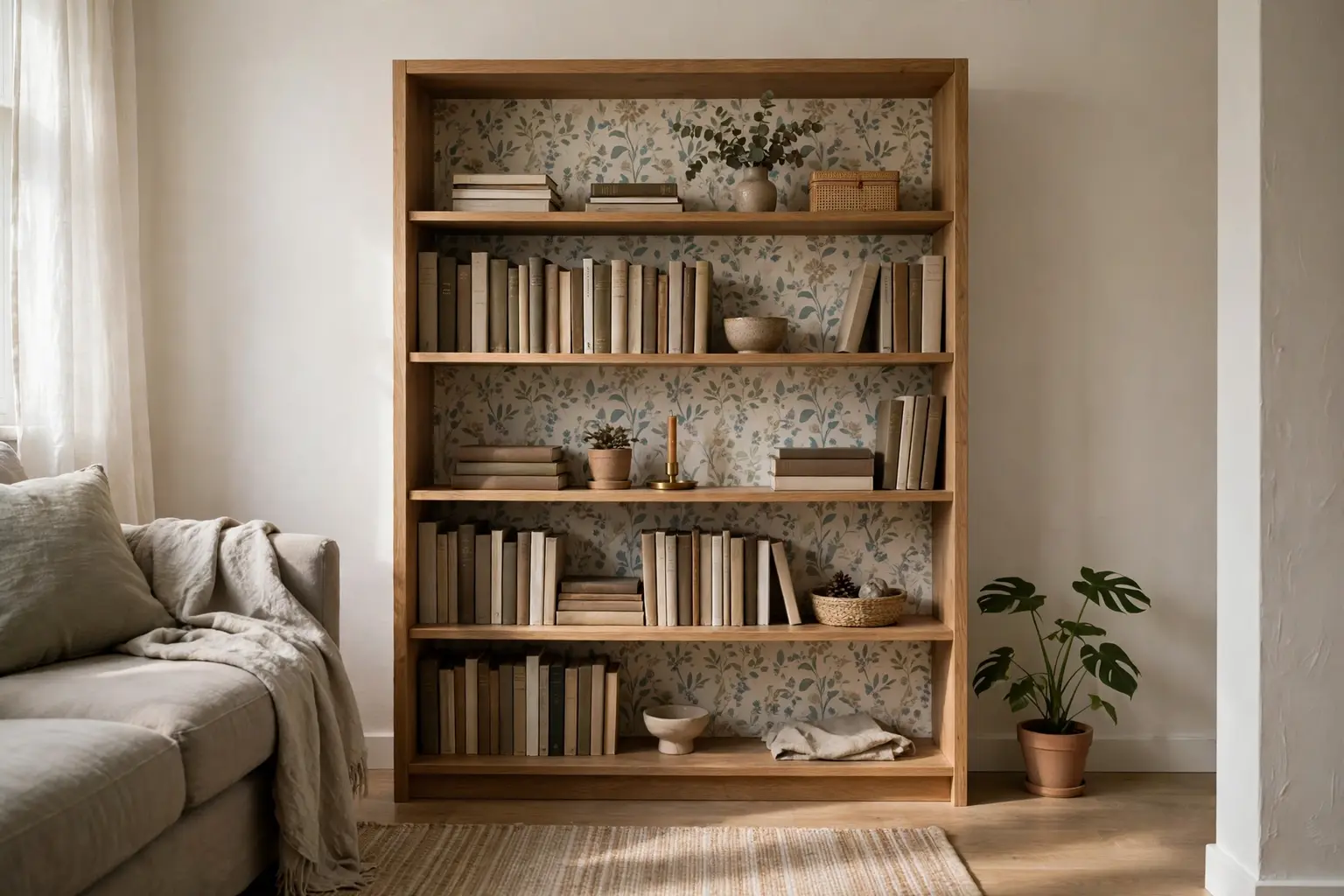
5. Line the Back of a Bookcase
A patterned bookcase backing can add colour behind books and decorative objects.
For a more reversible arrangement, apply wallpaper to a removable backing panel rather than directly to the original furniture finish.
Before using adhesive, check that the backing material is compatible with the product and test a small area.
Measure the panel carefully and cut the wallpaper to fit. A smaller-scale pattern often works well because books and objects already create visual detail.
Keep the finished panel secure and make sure it does not interfere with the bookcase's stability.
6. Cover a Door Panel or Closet Interior
A smooth interior door panel or closet backing can provide a smaller decorative surface than an entire room wall.
This is useful when you want to experiment with a pattern without committing to a large installation.
Before applying wallpaper, check:
- Whether the surface is smooth and compatible.
- Whether the door still closes properly.
- Whether hinges and handles remain unobstructed.
- Whether the wallpaper edges interfere with the frame.
- Whether the landlord permits changes to the door.
Do not cover fire-door certification labels, safety signage, hardware, or any required safety features. Check with the property manager before modifying a door with a fire-safety function.
Small Surfaces, Careful Placement
7. Back Open Shelving Away From Heat and Steam
Wallpaper on the back panel of an open bookcase or suitable shelving unit can introduce colour without covering an entire wall.
A small-scale pattern can work particularly well behind books, storage baskets, and decorative objects.
For kitchen shelving, choose a location away from direct cooking heat, grease, and regular steam exposure.
Do not assume that every peel-and-stick product is suitable for kitchens. Check the manufacturer's cleaning, heat, and moisture limitations before using it.
If the shelving is close to a cooktop or sink, a different decorative material may be more practical.
8. Use Wallpaper on One Bathroom Wall Only, With Ventilation in Mind
Bathroom wallpaper requires extra care because humidity can affect adhesive performance.
If you want to introduce a pattern, choose a product specifically approved by its manufacturer for the intended bathroom conditions.
Use it on a dry wall away from direct shower spray, bath splashes, and regular water exposure.
A bathroom with working ventilation is preferable, but ventilation alone does not make every wallpaper product suitable for a humid room.
York Wallcoverings warns that high-humidity areas, including bathrooms and kitchens, can increase the risk of bubbling and seam separation with its peel-and-stick products.
If the bathroom remains damp or has poor ventilation, choose framed artwork or another decorative option instead.
See York's wallpaper surface and humidity guidance.
9. Dress Up a Plain Wardrobe or Cabinet Front
A smooth wardrobe or cabinet front can become a decorative feature with a wallpaper panel.
This works particularly well when the furniture has plain, flat doors.
Measure each panel separately and plan the pattern alignment before cutting.
Check the material of the furniture. Painted, laminated, lacquered, and textured surfaces may respond differently to adhesive products.
Test a small, hidden area first and follow the manufacturer's surface compatibility and removal instructions.
Avoid applying wallpaper to surfaces with peeling finishes, loose edges, or damaged coatings.
Patterns That Help a Small Room
Pattern selection is a matter of personal preference, but scale, contrast, and placement can affect how a small room looks.
10. Use Vertical Stripes to Draw the Eye Upward
Vertical stripes can create a visual impression of height by directing attention toward the ceiling.
Choose a stripe width that suits the room and the furniture around it.
Subtle, low-contrast stripes can create a quieter effect, while wider or more contrasting designs make a stronger statement.
Plan the pattern alignment before applying adjoining strips. Misaligned stripes at the seams can be noticeable across the room.
11. Keep the Pattern Small and the Colour Palette Balanced
Small-scale patterns can work well in compact rooms because they introduce detail without dominating the entire wall.
Consider fine geometric designs, small florals, or subtle textures.
Choose colours that complement the existing furniture, flooring, and window treatments.
Light colours can help a room feel visually open, but they are not the only suitable choice. A darker colour can also work when balanced with appropriate lighting and simpler surrounding decor.
Use a sample to see how the design looks in your room during the day and under artificial lighting.
12. Use Bold Patterns as a Deliberate Focal Point
Large-scale wallpaper can add character to a small apartment when its placement is carefully considered.
Rather than treating four walls as one continuous decorative surface, start with the wall that naturally draws attention when entering the room.
Keep nearby furniture and textiles relatively simple if you want the wallpaper to remain the main focal point.
A bold pattern is not automatically unsuitable for a small room. Its effect depends on colour, contrast, lighting, and the other elements in the space.
How to Keep Wallpaper Looking Good and Remove It Carefully
A successful installation depends on preparation and maintenance.
Apply it according to the product instructions.
Clean and dry the surface using the manufacturer's recommended method. Align the first strip carefully and use an appropriate smoothing tool to remove air bubbles.
Avoid stretching the wallpaper because this can affect pattern alignment and the appearance of adjoining seams.
Check the edges periodically.
If an edge begins lifting, consult the manufacturer's guidance for that product.
Do not introduce additional glue or another adhesive unless the manufacturer approves it for the wallpaper and surface.
Read the removal instructions before installation.
Different products may require different removal methods.
Peel slowly and follow the manufacturer's recommended direction and technique. Some products have specific temperature or removal-condition instructions, so do not assume that applying heat is appropriate for every wallpaper.
Inspect the wall afterwards.
Once the wallpaper has been removed, check the paint and wall finish.
If you notice paint lifting, residue, or surface damage, address it before applying another decorative covering.
Removal results can vary depending on paint quality, wall preparation, product compatibility, and how long the wallpaper has remained in place.
No peel-and-stick wallpaper should be described as guaranteed damage-free for every rental property.
Quick Questions
Will peel-and-stick wallpaper damage the paint?
It can, depending on the paint finish, wall preparation, product, application period, and removal method.
Test a sample in a hidden area, follow the manufacturer's instructions, and avoid applying wallpaper to weak, damaged, or unsuitable surfaces.
A successful sample test reduces uncertainty but cannot guarantee a damage-free result across an entire wall.
Can I use peel-and-stick wallpaper in a bathroom or kitchen?
Some products are approved for certain bathroom and kitchen conditions, but suitability varies.
Check the manufacturer's moisture, heat, and cleaning guidance. Avoid direct water exposure, cooking heat, and surfaces that regularly become wet or greasy.
Can I reuse peel-and-stick wallpaper?
Do not assume that removable wallpaper can be reused after removal.
Some products can be repositioned during installation, but that does not necessarily mean they are designed for a second application.
Check the specific manufacturer's instructions before attempting to reuse it.
What if my walls are textured?
Many peel-and-stick products are designed for smooth surfaces and may not adhere properly to heavily textured walls.
Some products may have different compatibility instructions, so check the product documentation and test a sample if permitted.
If the wall is unsuitable, framed wallpaper panels or a removable decorative backing board can provide an alternative.
Related Guides
- How to Make a Small Living Room Cozy and Minimalist: Ideas for making a compact living room feel comfortable without adding unnecessary clutter.
- Small Apartment Entryway Ideas When You Don’t Have a Closet: Practical ways to organize a narrow apartment entryway.
- Small Closet Storage for Renters: Storage ideas for making better use of closet space without unnecessary permanent changes.