
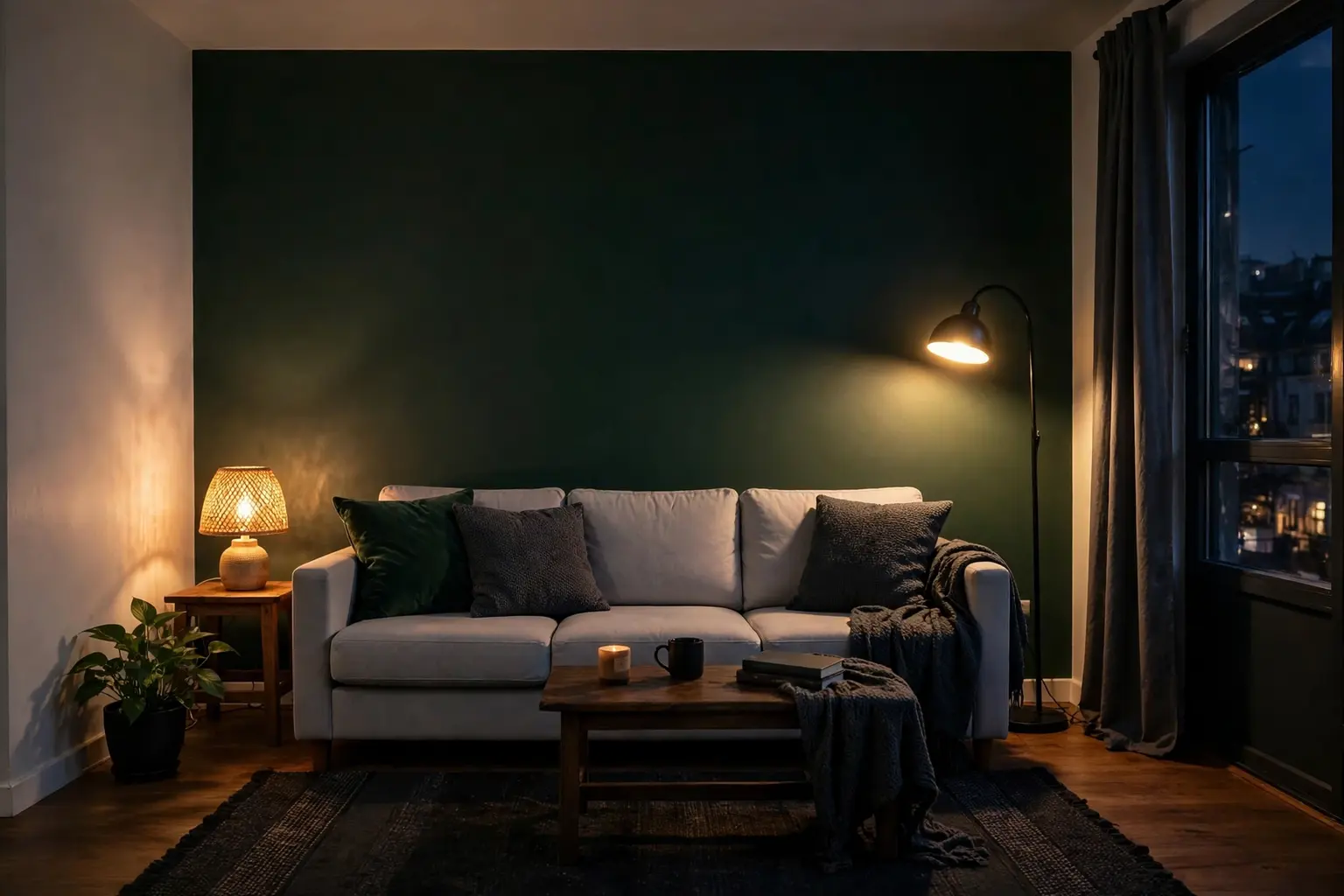
A moody living room sounds like something that needs a big house and dark wood panelling. It does not. In a small apartment, moody means deep colours, warm light and soft textures in a room that still feels comfortable to sit in.
The mistake is going dark everywhere at once. A small room with dark walls, dark furniture, dark curtains and no light plan feels smaller and harder to use. The moody living room ideas below work the other way: one or two dark surfaces, warm light at different heights, and enough contrast that the room feels layered instead of flat.
Most of these ideas need no drilling or permanent changes, and nothing requires painting every wall or buying furniture you cannot take with you when you move. However, curtain rods, heavy mirrors or artwork, and tall shelving may need suitable fixings and landlord permission. Check before installing anything that could damage the walls.
Before You Start: Three Checks
1. Check the light you already have.
Stand in the room at midday and again in the evening. Note which corner gets daylight and which corner goes dark first. One possible layout is to place the darkest surface opposite the brightest area, so the room keeps some contrast. Consider where the window sits, the direction daylight enters and what you want as the focal point. If the room has one small window, keeping the wall around it light and putting the dark colour on the wall you face when you sit down may work, but check how it looks in your own room.
2. Check the lease before anything sticks to a wall.
Peel-and-stick wallpaper, removable panels and adhesive hooks are temporary, but temporary does not mean every landlord allows them. Check the written agreement and get permission where it is required. Keep a copy of any approval for moving-out day.
3. Start with one dark surface, not four.
Pick the wall, the rug or the curtains first. Live with it for a week before adding the next dark thing. It is much easier to add depth than to undo a room that went too dark in one afternoon.
1. Make One Dark Accent Wall
One dark wall gives the whole room its mood. The other walls stay light, so the room keeps its shape.
Peel-and-stick wallpaper is the usual renter route, and a deep green, charcoal or navy pattern works well behind a sofa. Our guide to renter-friendly wallpaper for small apartments covers surface checks, sample testing and removal. The short version: test a sample in a hidden spot first, follow the manufacturer’s instructions exactly, and never cover dampness, mould or damaged paint.
If wallpaper is not allowed, a large dark fabric panel hung from a removable hook, or two matching dark framed prints side by side, can give the same focal point without adhesive on the wall.
2. Hang Dark Curtains High and Wide
Dark curtains change the room more than almost anything else, and the curtains themselves come down when you move. However, rod brackets may leave holes and need landlord permission, so check the installation method before buying.
Hang the rod 4 to 6 inches above the window frame and extend it 3 to 6 inches past each side, so the curtains stack clear of the glass when open. Floor-length curtains that just brush the floor look better than short ones that stop at the sill, and they make the window look taller. If drilling is not allowed, a tension rod may be an alternative, but only where the window recess and curtain weight suit the rod’s instructions and weight limit.
Choose a fabric in a deep colour: charcoal, forest green, navy or burgundy. Lighter rooms suit linen-look fabrics; a room that already feels cold suits velvet or a lined cotton. If the room gets limited daylight, consider how much light the curtains block. A less opaque fabric or curtains that stack fully clear of the window can preserve useful daylight. Keep the curtain colour close to the accent wall so the two dark surfaces read as one decision instead of two competing ones.
3. Layer Warm Light at Three Heights
A moody room needs more light sources, not fewer. One ceiling light makes dark colours look flat. Three warm sources at different heights make them look deep.
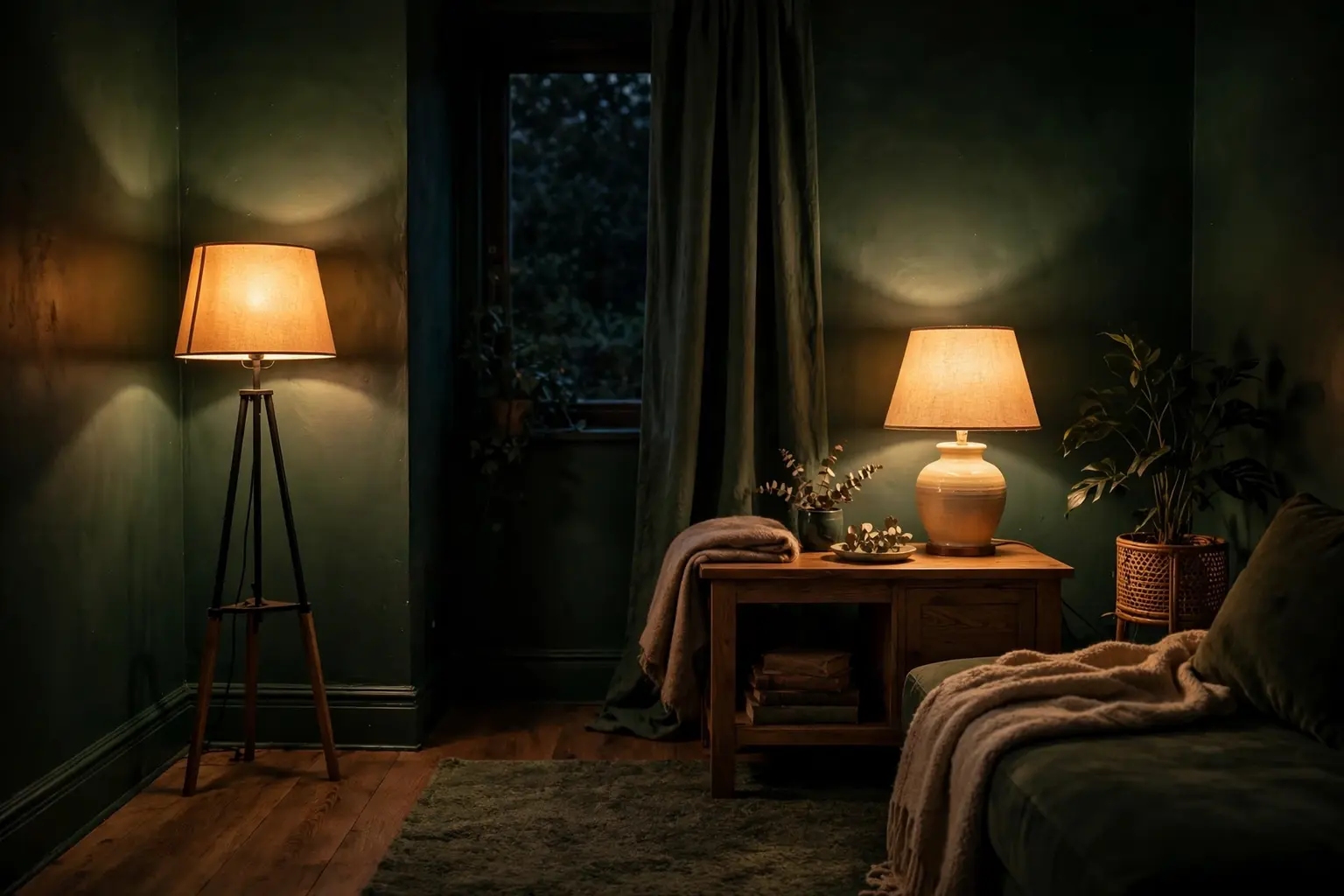
A practical starting set:
- Low: a table lamp on a side table or shelf, for reading light near the sofa.
- Middle: a floor lamp behind or beside the sofa, for general evening light. A typical floor lamp stands 58 to 64 inches tall, which puts the light above seated eye level without glaring.
- High: the ceiling light, used sparingly, or a small picture light above art.
Use warm bulbs (around 2700K is typical for living rooms) in all three, so the light matches instead of mixing cold and warm. A dimmer plug or a smart bulb in the floor lamp lets you drop the light low in the evening without buying new fixtures.
Check each fixture’s maximum wattage before changing bulbs, and make sure the bulbs and any dimmer are compatible. Keep electrical cords close to walls and out of walkways, where they cannot become a trip hazard. Even when you dim the lights for atmosphere, keep enough brightness for reading and walking comfortably around the room.
4. Ground the Room With a Dark Rug
A dark rug anchors the seating area and stops pale floors from washing the room out.
A 5 by 8 foot rug can work in some small living rooms, with the front legs of the sofa on it and the coffee table sitting fully on it. It is an example, not a size that suits every apartment. Measure your seating area before buying: the width of the sofa, the location of any chairs, the clearance around the furniture and the direction you lay the rug all affect the size you need. Aim for a rug at least as wide as the sofa, and check whether the chair legs can fit on it without crowding the arrangement.
Choose a low pile in a deep colour with a subtle pattern, so crumbs and dust do not show as quickly as they do on a flat dark surface. A rug pad underneath keeps it from sliding on hard floors and adds a little softness underfoot.
5. Add Deep-Coloured Cushions and Throws
Cushions and throws are the cheapest way to test a moody palette. They also let you change it with the seasons.
Pick two deep colours and one warm neutral. Forest green with charcoal and cream works, as does navy with burgundy and tan. Keep the sofa itself plain so the cushions do the work: a patterned cushion, a solid one in a second deep colour, and a throw folded over one arm.
On a light sofa, try a forest-green patterned cushion, a solid charcoal cushion and a cream throw. The two darker cushions add depth without covering the pale sofa. On a dark sofa, try a cream textured cushion, a tan cushion and a deep-green throw. The lighter cushions separate the dark surfaces so the seating does not become one solid block of colour.
Use textures that look good in low light: velvet, wool, chunky knit and linen. Avoid shiny fabrics, which catch the lamp light and look harsh against dark walls. Washable covers matter in a small room where the sofa gets daily use.
6. Use Dark Wood and Black Metal Accents
Dark finishes on small functional items pull the room together without another big dark surface.
A black metal side table, a dark wood tray for remotes, black curtain rings or a black floor lamp all count. Keep them to three or four pieces in the same finish family so they look deliberate rather than random.
If your furniture is pale wood or white, do not repaint it. A dark tray on the coffee table, a black floor lamp and dark bookends give the same effect and move with you.
7. Hang One Large Moody Art Piece
One large print can work better than a wall of small frames in a small room. It gives the eye somewhere to rest and it suits the moody style, which is about depth rather than clutter.
Choose art with deep colours and a simple frame: a dark landscape, a botanical print on a charcoal background, or an abstract piece in navy and ochre. Hang it at eye level, with the centre of the piece about 57 to 60 inches from the floor, which is a typical starting height for art on an open wall.
If the artwork hangs above a sofa, use the sofa as the reference instead of applying that height automatically. Position the artwork so it feels connected to the seating area, with enough clearance above the sofa back.
For the hanging method, follow the frame’s weight and your wall’s rules. Lightweight frames can work with removable adhesive hooks used exactly to the product’s instructions. A heavy framed piece needs a proper fixing and landlord permission, so check before you hang it.
8. Build a Dark Reading Corner
A moody living room needs one seat that invites sitting, not just looking.
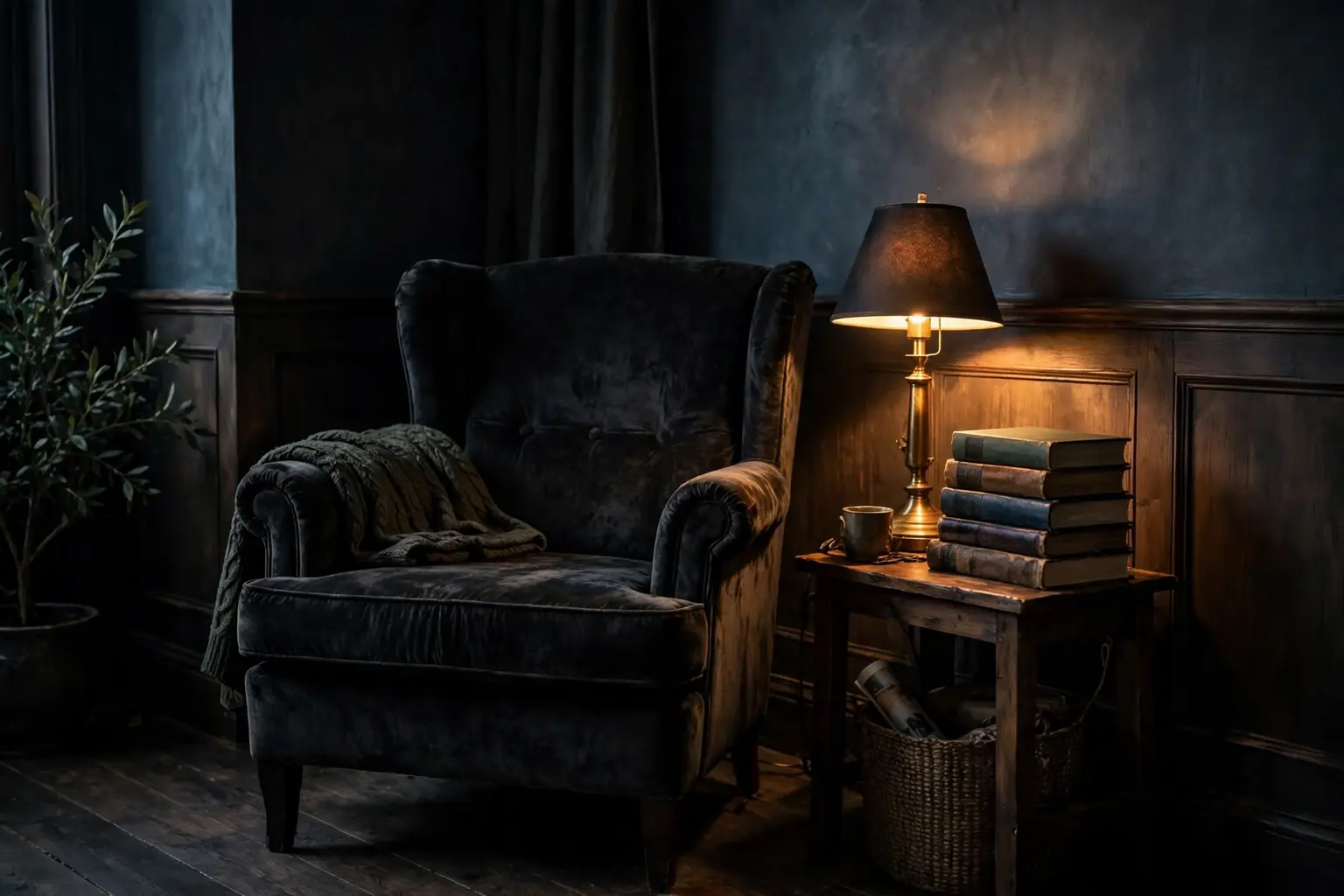
Pick a comfortable corner where you can get enough light for reading, even if it is not the darkest part of the room. Put a comfortable chair there with a small side table and a warm lamp, and keep a stack of books within reach. If there is no space for another chair, use the end of your existing sofa or an armchair you already own, with a lamp and a small surface nearby. A dark chair can deepen the look, but the seat should still be easy to see and use comfortably.
Our guide to reading nook ideas for small apartments has the full nook formula: seat, light, surface and warmth. In a moody room, the same formula applies, just in deeper colours.
9. Add Plants for Contrast
Dark rooms need something alive and green. Plants break up flat dark surfaces and give the eye a lighter shape to land on.
Low-light plants suit a moody corner best: snake plants, pothos, ZZ plants and peace lilies cope with less daylight than most houseplants, though all of them still need some light and proper watering. Put one tall plant where it receives adequate light and one trailing plant on a shelf with suitable light, rather than filling every surface. A corner that looks good for styling is not necessarily a corner where a plant will grow well.
Pet safety matters here. According to the ASPCA, snake plants, pothos, ZZ plants and peace lilies are toxic to cats and dogs if chewed. Keep them out of reach or skip them if you have pets. Pet-safe alternatives include spider plants, Boston ferns, calatheas and prayer plants. Check the light and care requirements of whichever plant you choose.
Keep the pots simple and dark: charcoal, deep green or matte black. A pale or patterned pot fights the palette, while a dark pot lets the leaves do the work.
10. Style Open Shelves Dark
Existing open shelves give you a small dark surface without installing anything new. If you want to install new wall shelves, check whether they need fixings and landlord permission. Tall freestanding bookcases may also need anti-tip anchoring, especially around children, following the CPSC Anchor It safety guidance.
Line the back of a bookcase or an open shelf with a removable dark panel, or simply style the shelf itself in dark colours: dark books, charcoal storage boxes, a black vase. The shelf reads as a dark block from across the room, which adds depth without a full accent wall.
Keep the shelf contents simple. Three groups of objects with space between them look calmer than a shelf packed edge to edge, and they are easier to dust. If the shelf holds books, turn a few stacks horizontal to break up the rows.
You can do this with things you already own. Place a short horizontal stack of books at one end, a vase or small object you already have in the middle, and a storage box or another group of books at the other end. Leave some empty space between them instead of buying decorations to fill the gaps.
If you do not already have suitable shelves, skip this idea entirely. You do not need to add shelving just to create a moody room.
11. Use Mirrors So the Room Never Feels Closed In
Mirrors are the safety valve of a moody room. They bounce the warm lamp light around and keep the dark surfaces from closing the room in.
Hang one large mirror opposite a window or a lamp, not opposite the darkest wall, so it reflects light rather than darkness. A mirror with a dark or black frame fits the palette and looks deliberate.
Safety matters here more than style. A heavy mirror needs a properly secured fixing rated for its weight, with landlord permission if drilling is required. Never hang a heavy mirror from adhesive hooks. If you cannot use a secured fixing, choose a lightweight mirror specifically designed for leaning or adhesive use and follow its own installation instructions. Never leave a tall, heavy mirror unsecured where it could be knocked over by a child, a pet or a vacuum cleaner.
12. Use Candles, Safely
Candlelight is the cheapest moody light there is, and also the one that needs the most care.
Keep candles on a stable, heat-resistant surface, away from curtains, throws, paper and plants. Never leave a burning candle unattended, and keep it out of reach of children and pets. Trim the wick before lighting to reduce smoking and soot on nearby walls.
Flameless LED candles give the same warm flicker without the risk, and they work well inside lanterns or on a shelf where a real flame would be unsafe. In a small room with fabric everywhere, flameless is the practical default, with real candles saved for occasions when you can watch them the whole time.
13. Add Warm Metallics to Catch the Light
A moody room without any shine can look flat. A few small reflective details can catch the warm lamp light without adding another major surface.
Brass, copper or warm gold in small doses catches the lamp light: a brass tray, copper picture frames, a gold floor lamp base, or metallic cushion trim. Keep it to two or three pieces, all in the same metal, so it reads as an accent rather than a theme.
You can mix warm and cool metals if the combination feels deliberate, but you do not need to. Brass with black metal is an easy starting combination that keeps the palette calm.
How to Keep a Moody Room From Feeling Smaller
Moody works in a small room when the dark surfaces have light and contrast to balance them.
- Keep the ceiling and some floor visible and light. A pale ceiling and areas of pale flooring around a dark rug help keep the room’s height and floor visible.
- Leave breathing room. One empty stretch of wall and one clear tabletop stop the room from feeling crowded.
- Repeat the dark colour without making every surface dark. An accent wall or rug can be the main dark surface, while cushions, a tray or small accessories repeat the colour in smaller doses. Major dark surfaces have more visual weight than small accents, so you do not need three large dark areas to make the room feel intentional.
- Check the room at night. Moody rooms are evening rooms. If it feels cosy at 8pm with the lamps on, it is working, even if it looks darker than usual at noon.
If the room still feels too dark after a week, try adjusting the light before removing colour: a brighter bulb in the floor lamp, a mirror opposite the window, or a pale throw on the sofa. Small light changes can help, but they will not solve every dark room. If it still feels closed in, consider reducing one of the major dark surfaces rather than adding more accessories.
A No-Drill Moody Setup for a Narrow Living Room
Imagine a narrow living room with one small window and a sofa along the longer wall. You want a moody look without drilling, installing shelves or blocking the daylight you already have.
Start with three of the ideas above: layered warm lighting, deep-coloured cushions and throws, and a dark rug.
Keep the window clear during the day. Place a floor lamp near one end of the sofa, with its cord kept against the wall and away from the walking route. Add two deep-coloured cushions and a lighter throw to break up the sofa. A dark rug under the sofa’s front legs can define the seating area without changing the walls.
Skip the dark curtains if they would block too much of the only window’s light. Skip new shelves, heavy wall art and a large mirror if you cannot install them safely. You can also leave out the accent wallpaper for now, since the rug and textiles already give the room dark surfaces.
This combination creates a moody seating area while keeping the window, walkway and walls clear. It is an illustrative setup, so measure your own room and furniture before choosing a rug or moving anything.
Quick Questions
Will a dark accent wall make my small living room feel smaller?
It can, if the room has little light and everything else is dark too. One dark wall with light walls around it, warm lamps and a mirror opposite the window usually makes the room feel deeper rather than smaller. Start with one wall and live with it for a week before adding more dark surfaces.
Do I have to paint to get a moody look?
No. Peel-and-stick wallpaper, dark curtains, a dark rug, deep-coloured cushions and warm lighting can create the same feeling without paint. Paint is the most permanent option and the one most likely to need landlord permission, so try the removable changes first.
Can a moody living room work on a tight budget?
Yes, because most of the change is textiles and light, not furniture. Curtains, cushions, a throw and a rug change the room more than a new sofa does. Start with no-cost changes: rearrange the lamps, cushions and throws you already own. If something is still missing, try a cushion cover or throw before buying larger items. Consider a rug or curtains later, after measuring and deciding which one would make the most useful difference.
Is a moody living room practical with kids or pets?
It can be, with a few safety and cleaning choices. Choose washable cushion covers and a low-pile rug that is easy to clean, and keep candles flameless.
Check the plants carefully, too. As noted in Section 9, snake plants, pothos, ZZ plants and peace lilies are toxic to cats and dogs if chewed, so keep them out of reach or choose pet-safe alternatives. Heavy mirrors, artwork and tall shelving also need suitable secure fixings so they cannot be pulled or knocked over.
Dark fabrics hide some marks better than pale ones, but they also show pet hair and dust, so a quick weekly vacuum of the seating area matters more than it did before.